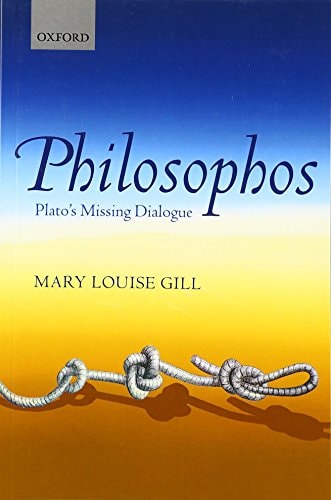
Philosophos: Plato's Missing Dialogue
0
0
As an Amazon Associate and affiliate partner, Menrva Books earns from qualifying purchases. Learn more
Author Description
Plato famously promised to complement the Sophist and the Statesman with another work on a third sort of expert, the philosopher--but we do not have this final dialogue. Mary Louise Gill argues that Plato promised the Philosopher, but did not write it, in order to stimulate his audience and encourage his readers to work out, for themselves, the portrait it would have contained. The Sophist and Statesman are themselves members of a larger series starting with the Theaetetus, Plato's investigation of knowledge, and the whole series relies on the Parmenides, the second part of which presents a philosophical exercise, introduced as the first step in a larger philosophical program. Gill contends that the dialogues leading up to the missing Philosopher, though they reach some substantive conclusions, are philosophical exercises of various sorts designed to train students in dialectic, the philosopher's method; and that a second version of the Parmenides exercise, closely patterned on it, spans parts of the Theaetetus and Sophist and brings the philosopher into view. This is the exercise about being, the subject-matter studied by Plato's philosopher. Plato hides the pieces of the puzzle and its solution in plain sight, forcing his students (and modern readers) to dig out the pieces and reconstruct the project. Gill reveals how, in finding the philosopher through the exercise, the student becomes a philosopher by mastering his methods. She shows that the target of Plato's exercise is internally related to its pedagogical purpose.
Menrva's Summary
THE THESIS
Does the absence of Plato's promised dialogue, the Philosopher, represent a deliberate pedagogical strategy rather than a historical loss? Mary Louise Gill, a scholar of ancient philosophy, examines the structural relationship between the Theaetetus, Sophist, and Statesman to argue that Plato intentionally left the final work unwritten. By analyzing the internal logic of these dialogues, Gill posits that Plato designed them as a series of dialectical exercises intended to force the reader to actively synthesize the definition of the philosopher through the practice of the method itself.
THE SCOPE MAP
What You Will Find
- Analysis of the thematic and structural continuity between the Theaetetus, Sophist, and Statesman.
- Examination of the Parmenides as a foundational philosophical exercise for the subsequent dialogues.
- Investigation into the pedagogical function of dialectic as a method for training students.
- Reconstruction of the missing portrait of the philosopher based on the clues embedded within the existing texts.
THE AUTHORITY PERSPECTIVE
Scholars recognize this work as a significant contribution to the study of Platonic methodology and the interpretation of his later dialogues. Readers frequently note the academic density of the prose, which requires a strong familiarity with the primary texts to fully grasp the author's complex arguments.
Page Count:
302
Publication Date:
2015-02-04
Publisher:
Oxford University Press
ISBN-10:
0198708653
ISBN-13:
9780198708650
Philosophy
Plato
Epistemology
Community Tags
Similar Books