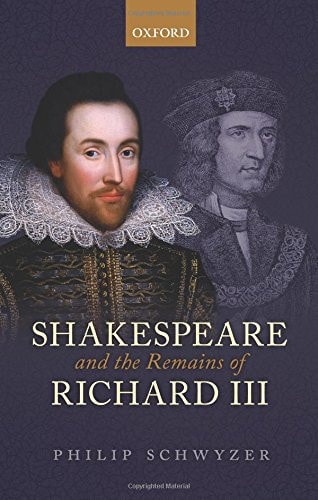
Shakespeare and the Remains of Richard III
0
0
As an Amazon Associate and affiliate partner, Menrva Books earns from qualifying purchases. Learn more
Author Description
This book explores how recollections and traces of the reign of Richard III survived a century and more to influence the world and work of William Shakespeare. In Richard III, Shakespeare depicts an era that had only recently passed beyond the horizon of living memory. The years between Shakespeare's birth in 1564 and the composition of the play in the early 1590s would have seen the deaths of the last witnesses to Richard's reign. Yet even after the extinction of memory, traces of the Yorkist era abounded in Elizabethan England - traces in the forms of material artefacts and buildings, popular traditions, textual records, and administrative and religious institutions and practices. Other traces had notoriously disappeared, not least the bodies of the princes reputedly murdered in the Tower, and the King's own body, which remained lost until its dramatic rediscovery in the summer of 2012. Shakespeare and the Remains of Richard III charts the often complex careers of these pieces of the past over the course of a century framed on one side by the historical reign of Richard III (1483-85) and on the other by Shakespeare's play. Drawing on recent work in fields including archaeology, memory studies, and material biography, this book offers a fresh approach to the cultural history of the Tudor era, as well as a fundamentally new interpretation of the wellsprings and preoccupations of Richard III. The final emphasis is not only on what Shakespeare does with the traces of Richard's reign but also on what those traces do through Shakespeare--the play, in spite of its own pessimistic assumptions about history, has become the medium whereby certain fragments and remains of a long-lost world live on into the present day.
Menrva's Summary
THE THESIS
This book investigates how material traces, cultural memories, and historical remnants of the Yorkist era persisted into the Elizabethan period to shape the composition and thematic preoccupations of William Shakespeare's play, Richard III. Philip Schwyzer, a scholar specializing in early modern literature and culture, utilizes a multidisciplinary framework to bridge the gap between historical reality and dramatic representation. By examining the transition from living memory to archival record, the author argues that Shakespeare's work functions as a vessel for the survival of the past, transforming fragmented remains into a lasting cultural legacy.
THE SCOPE MAP
What You Will Find
- Analysis of material artifacts, architecture, and textual records from the Yorkist era that influenced Elizabethan perceptions.
- A methodological approach integrating memory studies, archaeology, and material biography.
- Examination of the historical reign of Richard III (1483-1485) in contrast to its dramatization in the 1590s.
- Exploration of how the absence of physical remains, such as the bodies of the princes in the Tower, informed the narrative tension of the play.
THE AUTHORITY PERSPECTIVE
Scholars recognize this work as a significant contribution to the study of early modern historiography and the intersection of material culture with dramatic literature. Readers frequently note the academic density of the prose, which provides a rigorous analysis of how historical fragments continue to exert influence through artistic mediums.
Page Count:
272
Publication Date:
2015-04-26
Publisher:
Oxford University Press
ISBN-10:
0198728034
ISBN-13:
9780198728030
History
Memory Studies
Great Britain
Archaeology
Literary Criticism
Cultural History
In literature
Community Tags
Other Editions(3)

Similar Books

Reader Comments
Share Your Thoughts
No comments yet. Be the first to share your thoughts!