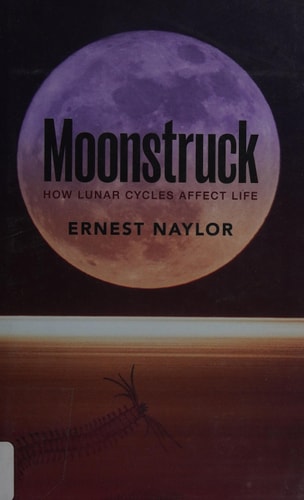
Moonstruck: How Lunar Cycles Affect Life
0
0
As an Amazon Associate and affiliate partner, Menrva Books earns from qualifying purchases. Learn more
Author Description
Throughout history, the influence of the full Moon on humans and animals has featured in folklore and myths. Yet it has become increasingly apparent that many organisms really are influenced indirectly, and in some cases directly, by the lunar cycle. Breeding behaviour among some marine animals has been demonstrated to be controlled by internal circalunar biological clocks, to the point where lunar-daily and lunar-monthly patterns of Moon-generated tides are embedded in their genes. Yet, intriguingly, Moon-related behaviours are also found in dry land and fresh water species living far beyond the influence of any tides.In Moonstruck, Ernest Naylor dismisses the myths concerning the influence of the Moon, but shows through a range of fascinating examples the remarkable real effects that we are now finding through science. He suggests that since the advent of evolution on Earth, which occurred shortly after the formation of the Moon, animals evolved adaptations to the lunar cycle, and considers whether, if Moon-clock genes occur in other animals, they also might exist in us?
Menrva's Summary
THE THESIS
This book investigates the scientific validity of lunar influence on biological organisms, questioning whether internal circalunar clocks exist across diverse species. Ernest Naylor, a specialist in marine biology and biological rhythms, synthesizes current research to distinguish between folklore and verifiable evolutionary adaptations. He presents a framework that links the formation of the Moon to the development of genetic timing mechanisms in animals, exploring the potential for similar biological clocks in humans.
THE SCOPE MAP
What You Will Find
- Analysis of circalunar biological clocks in marine and terrestrial species
- Examination of the evolutionary timeline connecting lunar formation to animal behavior
- Case studies demonstrating lunar-daily and lunar-monthly genetic patterns
- Scientific evaluation of myths versus empirical evidence regarding lunar influence
THE AUTHORITY PERSPECTIVE
Experts recognize this work as a clear, accessible introduction to the field of chronobiology and the specific study of lunar rhythms. Readers frequently note the balance between scientific rigor and the author's ability to explain complex genetic adaptations for a general audience.
Page Count:
256
Publication Date:
2015-11-01
Publisher:
Oxford University Press
ISBN-10:
0198724217
ISBN-13:
9780198724216
Science
Nature
Natural History
Zoology
Moon
Nature
Biology
Plants
Tides
Evolutionary Biology
Human beings
Community Tags
Similar Books