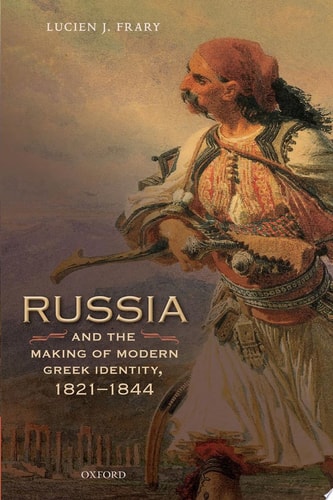
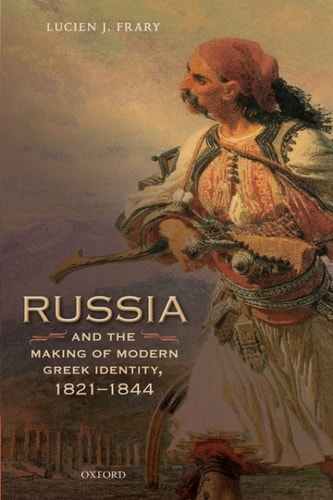
Russia and the Making of Modern Greek Identity, 1821-1844
0
0
As an Amazon Associate and affiliate partner, Menrva Books earns from qualifying purchases. Learn more
Author Description
The birth of the Greek nation in 1830 was a pivotal event in modern European history and in the history of nation-building in general. As the first internationally recognized state to appear on the map of Europe since the French Revolution, independent Greece provided a model for other national movements to emulate. Throughout the process of nation formation in Greece, the Russian Empire played a critical part. Drawing upon a mass of previously fallow archival material, most notably from Russian embassies and consulates, this volume explores the role of Russia and the potent interaction of religion and politics in the making of modern Greek identity. It deals particularly with the role of Eastern Orthodoxy in the transformation of the collective identity of the Greeks from the Ottoman Orthodox millet into the new Hellenic-Christian imagined community. Lucien J. Frary provides the first comprehensive examination of Russian reactions to the establishment of the autocephalous Greek Church, the earliest of its kind in the Orthodox Balkans, and elucidates Russia's anger and disappointment during the Greek Constitutional Revolution of 1843, the leaders of which were Russophiles. Employing Russian newspapers and "thick journals" of the era, Frary probes responses within Russian reading circles to the reforms and revolutions taking place in the Greek kingdom. More broadly, the volume explores the making of Russian foreign policy during the reign of Nicholas I (1825-55) and provides a distinctively transnational perspective on the formation of modern identity.
Menrva's Summary
THE THESIS
How did the Russian Empire influence the formation of modern Greek identity and the development of the Greek state between 1821 and 1844? Lucien J. Frary, a specialist in Russian and Balkan history, utilizes previously untapped archival materials from Russian diplomatic missions to investigate the intersection of religion, politics, and national identity. He argues that the Russian Empire was a central, often contentious, actor in the transition of the Greek population from an Ottoman millet to a distinct Hellenic-Christian community.
THE SCOPE MAP
What You Will Find
- Analysis of the establishment of the autocephalous Greek Church and Russian diplomatic reactions.
- Examination of the 1843 Greek Constitutional Revolution and its impact on Russo-Greek relations.
- Utilization of primary source materials including Russian embassy archives, newspapers, and contemporary journals.
- A transnational perspective on the foreign policy of Nicholas I and the evolution of Greek national consciousness.
THE AUTHORITY PERSPECTIVE
Scholars recognize this work as a significant contribution to the study of 19th-century Balkan and Russian history. Readers frequently note the academic density of the prose and the depth of the archival research provided by the author.
Page Count:
304
Publication Date:
2015-08-11
Publisher:
Oxford University Press
ISBN-10:
0198733771
ISBN-13:
9780198733775
Religion
History
International relations
European History
Modern Greek
Greece
Community Tags
Other Editions(2)
Similar Books