The Art of Listening in the Early Church
0
0
As an Amazon Associate and affiliate partner, Menrva Books earns from qualifying purchases. Learn more
Author Description
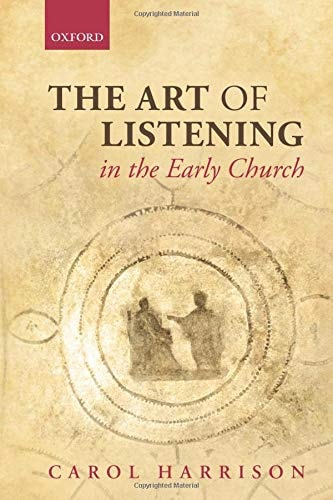
How did people think about listening in the ancient world, and what evidence do we have of it in practice? The Christian faith came to the illiterate majority in the early Church through their ears. This proved problematic: the senses and the body had long been held in suspicion as all too temporal, mutable and distracting. Carol Harrison argues that despite profound ambivalence on these matters, in practice, the senses, and in particular the sense of hearing, were ultimately regarded as necessary - indeed salvific - constraints for fallen human beings. By examining early catechesis, preaching and prayer, she demonstrates that what illiterate early Christians heard both formed their minds and souls and, above all, enabled them to become "literate" listeners; able not only to grasp the rule of faith but also tacitly to follow the infinite variations on it which were played out in early Christian teaching, exegesis and worship. It becomes clear that listening to the faith was less a matter of rationally appropriating facts and more an art which needed to be constantly practiced: for what was heard could not be definitively fixed and pinned down, but was ultimately the Word of the unknowable, transcendent God. This word demanded of early Christian listeners a response - to attend to its echoes, recollect and represent it, stretch out towards it source, and in the process, be transformed by it.
Menrva's Summary
THE THESIS
How did the early Christian Church reconcile the inherent suspicion of the physical senses with the necessity of auditory engagement for the transmission of faith? Carol E. Harrison, a scholar of early Christian history, investigates the tension between the philosophical distrust of the body and the practical reliance on hearing as a primary vehicle for religious instruction. She argues that listening was not merely a passive reception of information but a disciplined, salvific art form that enabled illiterate congregants to internalize complex theological truths and participate in the divine Word.
THE SCOPE MAP
What You Will Find
- Analysis of early Christian catechesis, preaching, and liturgical prayer practices.
- Examination of the philosophical and theological debates regarding the senses in the ancient world.
- Discussion of the transition from oral reception to the formation of a 'literate' listener capable of interpreting theological nuances.
- Exploration of the transformative power of the Word as a transcendent, non-static entity requiring constant active engagement.
THE AUTHORITY PERSPECTIVE
Scholars and historians of late antiquity frequently cite this work for its nuanced approach to sensory history and its contribution to understanding early Christian pedagogy. Readers often note the academic density of the prose, which provides a rigorous framework for those interested in the intersection of theology and the history of human perception.
Page Count:
320
Publication Date:
2015-07-19
Publisher:
Oxford University Press
ISBN-10:
0198744951
ISBN-13:
9780198744955
Religion
History
Christianity
Listening
Theology doctrinal
Church History
Theology
Community Tags
Similar Books