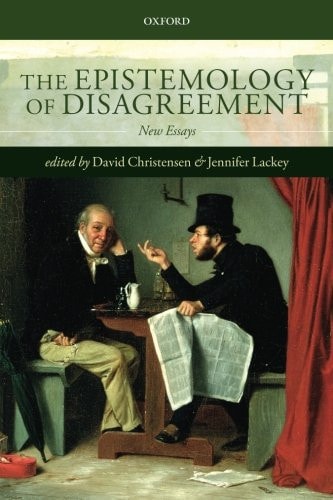
The Epistemology of Disagreement: New Essays
0
0
As an Amazon Associate and affiliate partner, Menrva Books earns from qualifying purchases. Learn more
Author Description
The Epistemology of Disagreement brings together essays from a dozen philosophers on the epistemic significance of disagreement; all but one of the essays are new. Questions discussed include: When (if ever) does the disagreement of others require a rational agent to revise her beliefs? Do 'conciliatory' accounts, on which agents are required to revise significantly, suffer from fatal problems of self-defeat, given the disagreement about disagreement? What is the significance of disagreement about philosophical topics in particular? How does the epistemology of disagreement relate to broader epistemic theorizing? Does the increased significance of multiple disagreeing agents depend on their being independent of one another? John Hawthorne and Amia Srinivasan, Thomas Kelly, and Brian Weatherson all weigh in with attacks on conciliatory views or defenses of non-conciliatory approaches. David Christensen and Stewart Cohen take up the opposite side of the debate. Bryan Frances, Sanford Goldberg, and Ernest Sosa discuss a kind of disagreement that will be of particular concern to most readers of this book: disagreement about philosophy. And Robert Audi, Jonathan Kvanvig, and Jennifer Lackey tackle some general theoretical issues that bear on disagreement.The philosophers represented here include some who have contributed actively to the disagreement literature already, as well as some who are exploring the issue for the first time. Their work helps to deepen and expand our understanding of some epistemic phenomena that are central to any thoughtful believer's engagement with other believers.
Menrva's Summary
THE THESIS
This collection investigates the core question of how rational agents should adjust their beliefs when confronted with disagreement from others. The editors, David Christensen and Jennifer Lackey, compile original essays from twelve prominent philosophers to examine the epistemic significance of peer disagreement. The volume evaluates whether conciliatory responses to disagreement are logically consistent or if they lead to self-defeating outcomes, while also exploring the specific challenges posed by philosophical disputes.
THE SCOPE MAP
What You Will Find
- Analysis of conciliatory versus non-conciliatory epistemic frameworks.
- Theoretical exploration of disagreement regarding philosophical topics.
- Examination of the role of independence among disagreeing agents.
- Discussion of the broader implications of disagreement for general epistemic theory.
THE AUTHORITY PERSPECTIVE
Experts recognize this volume as a primary resource for those studying the intersection of social epistemology and rational belief revision. Readers frequently note the high level of academic rigor and the diversity of viewpoints presented by the contributors.
Page Count:
288
Publication Date:
2016-03-01
Publisher:
Oxford University Press
ISBN-10:
0198748116
ISBN-13:
9780198748113
Philosophy
Academic
Logic
Epistemology
Knowledge Theory
Community Tags
Similar Books