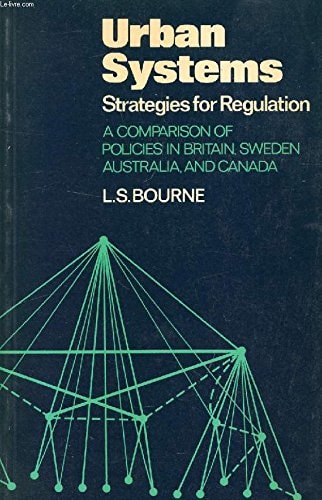
Urban Systems: Strategies for Regulation: A Comparison of Policies in Britain, Sweden, Australia, and Canada
0
0
As an Amazon Associate and affiliate partner, Menrva Books earns from qualifying purchases. Learn more
Author Description
One of the most striking consequences of post-war urban growth is a growing awareness of the need to regulate urbanization at the national level. This study is a comparative review of recent national urban policy experience in four countries: Britain, Sweden, Australia and Canada. The theoretical background to the four case studies is the concept of an intergrated system of cities: a system which encompasses all of a nations`s territory, and is increasingly the dominant influence in shaping national pattens of economic and social development. Students of urban and regional geography; urban planners.
Menrva's Summary
THE THESIS
This study investigates the necessity and efficacy of national-level urban regulation by comparing policy frameworks across four distinct developed nations. Larry S. Bourne, a recognized scholar in urban geography, utilizes a comparative analytical framework to evaluate how different governments manage urban growth. By applying the concept of an integrated system of cities, the author examines how urbanization influences national economic and social development patterns. The work provides a structured review of policy experiences in Britain, Sweden, Australia, and Canada to determine how national territory is managed in the face of rapid post-war expansion.
THE SCOPE MAP
What You Will Find
- Comparative analysis of national urban policy frameworks in Britain, Sweden, Australia, and Canada.
- Theoretical application of the integrated system of cities model to national territorial management.
- Evaluation of the relationship between urban growth and national economic development.
- Case study methodology focusing on post-war urban planning strategies and regulatory outcomes.
THE AUTHORITY PERSPECTIVE
Experts in urban geography and regional planning identify this work as a foundational comparative study for understanding mid-20th-century policy shifts. Readers frequently note the academic density of the prose, which serves as a primary resource for students and practitioners of urban development.
Page Count:
284
Publication Date:
1976-01-08
Publisher:
Oxford University Press
ISBN-10:
0198740557
ISBN-13:
9780198740551
Economics
Public Policy
Sociology
Great Britain
City Planning
urban planning
Geography