American Colossus
0
0
As an Amazon Associate and affiliate partner, Menrva Books earns from qualifying purchases. Learn more
Author Description
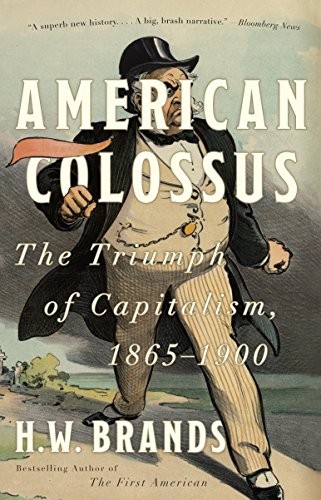
The years between the Civil War and the end of the nineteenth century saw the wholesale transformation of America from a land of small farmers and small businessmen into an industrial giant. Driven by unfathomably wealthy and powerful businessmen like J. P. Morgan, Andrew Carnegie and John D. Rockefeller, armies of workers, both male and female, were harnessed to a new vision of massive industry. A society rooted in the soil became one based in cities, and legions of immigrants were drawn to American shores. What’s more, in accomplishing its revolution, capitalism threatened to eclipse American democracy. “What do I care about the law?” bellowed Cornelius Vanderbilt. “Hain’t I got the power?” He did, and with it he and the other capitalists reshaped every aspect of American life. In *American Colossus*, H.W. Brands portrays the emergence, in a remarkably short time, of a recognizably modern America. The capitalist revolution left not a single area or aspect of American life untouched. It roared across the South, wrenching that region from its feudal past and integrating the southern economy into the national one. It burst over the West, dictating the destruction of Native American economies and peoples, driving the exploitation of natural resources, and making the frontier of settlement a business frontier as well. It crashed across the urban landscape of the East and North, turning cities into engines of wealth and poverty, opulence and squalor. It swamped the politics of an earlier era, capturing one major party and half of the other, inspiring the creation of a third party and determining the issues over which all three waged some of the bitterest battles in American history. Brands’s spellbinding narrative beautifully depicts the oil gushers of western Pennsylvania, the rise, in Chicago, of the first skyscraper, the exploration of the Colorado River, the cattle drives of the West, and the early passionate sparks of union life. By 1900 the America he portrays i
Menrva's Summary
THE THESIS
The book examines the profound economic and social transformation of the United States from the Civil War to the end of the nineteenth century. It details how powerful industrialists like J.P. Morgan, Andrew Carnegie, and John D. Rockefeller harnessed labor to build massive industries, shifting the nation from an agrarian society to an urban, industrial one and drawing in legions of immigrants. The narrative explores how this capitalist revolution reshaped every facet of American life, from the South's integration into the national economy to the exploitation of the West and the stark contrasts of wealth and poverty in Eastern cities. It also analyzes the significant impact on politics, with capitalism capturing political parties and shaping national debates.
THE SCOPE MAP
- The transformation of America into an industrial giant between the Civil War and 1900.
- The rise of powerful businessmen and their impact on industry and labor.
- The shift from an agrarian society to an urbanized, industrial nation.
- The role of immigration in fueling industrial growth.
- The tension between capitalism and American democracy.
- The impact of industrialization on the South, West, and urban centers.
- Narrative depictions of oil gushers, skyscrapers, cattle drives, and early labor movements.
THE AUTHORITY PERSPECTIVE
Henry William Brands's American Colossus is recognized for its comprehensive portrayal of America's industrial revolution. The book is lauded for its detailed account of the period's economic and social upheaval, highlighting the immense power wielded by industrialists and the resulting societal shifts. Readers and critics often note Brands's ability to weave together the grand narrative of national transformation with specific, evocative details of the era. The work is considered a significant exploration of how capitalism fundamentally reshaped the American landscape, politics, and identity by the close of the nineteenth century.
Page Count:
624
Publication Date:
2010-01-01
ISBN-10:
0385523335
ISBN-13:
9780385523332
Non-Fiction
History
Business
American History
Community Tags
Similar Books