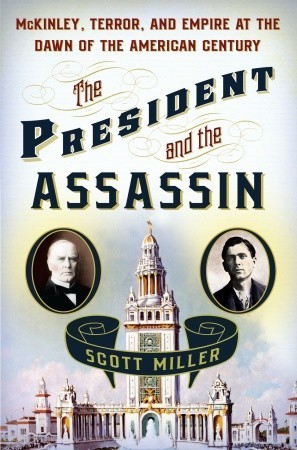
The President and the Assassin
0
0
As an Amazon Associate and affiliate partner, Menrva Books earns from qualifying purchases. Learn more
Author Description
The era leading up to the assassination of President William McKinley in 1901 was defined by enormous expansion in American industry and muscle-flexing abroad as well as the potent rise of labor unrest and revolutionary ideas such as anarchy. The growth of railroads, steel output, consumer goods, patents and sheer American ingenuity enriched the captains of industry, while the laborers, assembly-line workers, coal miners and armies of poor immigrants performed mind-numbing tasks for quarters and dimes per day. «Wall Street Journal» correspondent Miller harnesses several narratives successively. He moves between the coffer-rich Republican election of the self-made man and Civil War hero McKinley against the populist William Jennings Bryan, to the meeting between the painfully shy working-class loner in Cleveland, Leon Czolgosz, and the charismatic anarchist speaker Emma Goldman. Fired up by Goldman’s words on social revolution and liberty—which in turn had emerged from a movement that Miller neatly traces from the work of Edmund Burke, William Godwin and the Transcendentalists—Czolgosz steeled himself for the “propaganda of the deed”—e.g., the kind of deadly terrorism that was rocking European capitals in the 1890s. Meanwhile, McKinley was faced with international crises that he would manipulate effectively for American imperialist gain, such as the annexation of Hawaii, defeat of Spain for the protectorate of Cuba and the Philippines, takeover of Guam and Puerto Rico and an attempted Open Door policy toward China (thwarted by the Boxer Rebellion). This is a wildly complex and significant period in American history, and Miller does a solid job of attending to the many boiling pots on the stove. [Kirkus Reviews][1]
Menrva's Summary
THE THESIS
The book investigates the turbulent socio-political climate of the United States in the years leading up to President William McKinley's assassination in 1901. The narrative explores the stark economic disparities between wealthy industrialists and exploited laborers, the rise of radical ideologies like anarchism, and McKinley's assertive foreign policy that expanded American influence globally. It details the influences on Leon Czolgosz, the assassin, tracing his radicalization through figures like Emma Goldman and the broader European anarchist movement, while simultaneously examining McKinley's strategic handling of international crises for imperial gain.
THE SCOPE MAP
- An examination of the economic expansion and labor unrest in America at the turn of the 20th century.
- A detailed account of President William McKinley's political career and foreign policy decisions, including the annexation of Hawaii and the Spanish-American War.
- An exploration of the life and radicalization of Leon Czolgosz, influenced by anarchist thinkers like Emma Goldman.
- Analysis of the intellectual lineage of anarchist thought, tracing it from Edmund Burke and William Godwin to the Transcendentalists.
- Coverage of the political landscape, including the election of McKinley against William Jennings Bryan.
- Insights into the 'propaganda of the deed' philosophy and its connection to European terrorism of the 1890s.
THE AUTHORITY PERSPECTIVE
Kirkus Reviews describes the book as a solid job of attending to the many boiling pots on the stove during a complex and significant period in American history. The review highlights the author's success in weaving together multiple narratives, from McKinley's political maneuvering and imperialist expansion to the personal radicalization of Leon Czolgosz. It notes the book's comprehensive scope, covering both the economic stratification and the ideological underpinnings of the era. The assessment suggests a detailed and well-researched historical account.
Page Count:
422
Publication Date:
2011-01-01
ISBN-10:
1400067529
ISBN-13:
9781400067527
Politics
History
Biography
Non-Fiction
American History
Community Tags
Similar Books