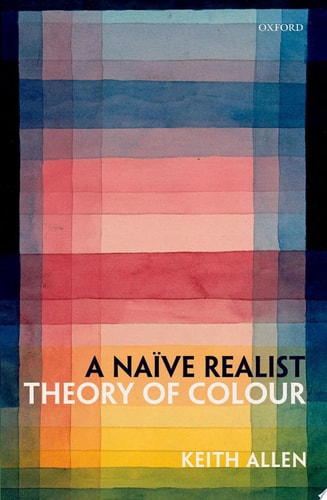
A Naive Realist Theory of Colour
0
0
As an Amazon Associate and affiliate partner, Menrva Books earns from qualifying purchases. Learn more
Author Description
A Naive Realist Theory of Colour defends the view that colours are mind-independent properties of things in the environment, that are distinct from properties identified by the physical sciences. This view stands in contrast to the long-standing and wide-spread view amongst philosophers and scientists that colours don't really exist - or at any rate, that if they do exist, then they are radically different from the way that they appear. It is argued that a naive realist theory of colour best explains how colours appear to perceiving subjects, and that this view is not undermined either by reflecting on variations in colour perception between perceivers and across perceptual conditions, or by our modern scientific understanding of the world. A Naive Realist Theory of Colour also illustrates how our understanding of what colours are has far-reaching implications for wider questions about the nature of perceptual experience, the relationship between mind and world, the problem of consciousness, the apparent tension between common sense and scientific representations of the world, and even the very nature and possibility of philosophical inquiry.
Menrva's Summary
THE THESIS
This book investigates the core question of whether colours are mind-independent properties of the environment or merely subjective constructs. Keith Allen, a philosopher specializing in the nature of perception, challenges the prevailing scientific and philosophical consensus that colours are either non-existent or radically different from their appearance. He presents a robust defense of naive realism, arguing that this framework provides the most coherent explanation for how colours are perceived by subjects in varying conditions.
THE SCOPE MAP
What You Will Find
- A detailed philosophical defense of naive realism regarding colour properties.
- Analysis of the tension between common sense perception and scientific representations of the world.
- Examination of perceptual variation across different subjects and environmental conditions.
- Discussion on the implications of colour theory for the broader problem of consciousness and mind-world relationships.
THE AUTHORITY PERSPECTIVE
Experts in the field of philosophy of mind recognize this work as a significant contribution to the ongoing debate regarding perceptual realism. Readers frequently note the academic density of the prose, which is intended for those with a background in analytic philosophy.
Page Count:
224
Publication Date:
2017-02-01
Publisher:
Oxford University Press
ISBN-10:
0198755368
ISBN-13:
9780198755364
Philosophy
Epistemology
Metaphysics
Color Vision
Perception
Community Tags
Similar Books