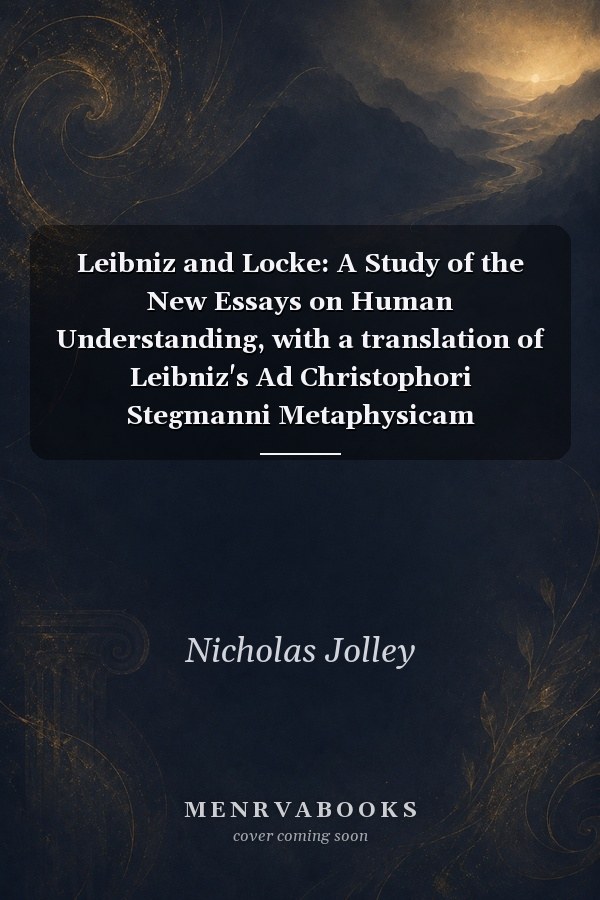
Leibniz and Locke: A Study of the New Essays on Human Understanding, with a translation of Leibniz's Ad Christophori Stegmanni Metaphysicam Unitariorum
0
0
As an Amazon Associate and affiliate partner, Menrva Books earns from qualifying purchases. Learn more
Author Description
This is the first modern interpretation of Leibniz's comprehensive critique of Locke, the New Essays on Human Understanding. Arguing that the New Essays is controlled by the overriding purpose of refuting Locke's alleged materialism, Jolley establishes the metaphysical and theological motivation of the work on the basis of unpublished correspondence and manuscript material. He also shows the relevance of Leibniz's views to contemporary debates over innate ideas, personal identity, and natural kinds.
Menrva's Summary
THE THESIS
This study investigates the philosophical conflict between Gottfried Wilhelm Leibniz and John Locke, specifically focusing on how Leibniz’s critique of Locke’s materialism shapes the arguments within the New Essays on Human Understanding. Nicholas Jolley, a scholar of early modern philosophy, utilizes unpublished correspondence and manuscript materials to reconstruct the metaphysical and theological motivations behind Leibniz’s work. By situating the text within its historical context, Jolley argues that Leibniz’s primary objective was to dismantle the materialist implications of Locke’s empiricism.
THE SCOPE MAP
What You Will Find
- A detailed analysis of Leibniz’s New Essays on Human Understanding.
- Examination of early modern debates regarding innate ideas, personal identity, and natural kinds.
- Integration of primary source material, including unpublished manuscripts and correspondence.
- A translation of Leibniz’s Ad Christophori Stegmanni Metaphysicam Unitariorum.
THE AUTHORITY PERSPECTIVE
Scholars recognize this work as a foundational text for understanding the intellectual friction between rationalism and empiricism in the seventeenth century. Readers frequently note the academic density of the prose, which is intended for students and researchers of early modern philosophy.
Page Count:
232
Publication Date:
1987-03-19
Publisher:
Oxford University Press
ISBN-10:
0198750803
ISBN-13:
9780198750802
Philosophy
Academic
Metaphysics
Epistemology
Community Tags
Similar Books