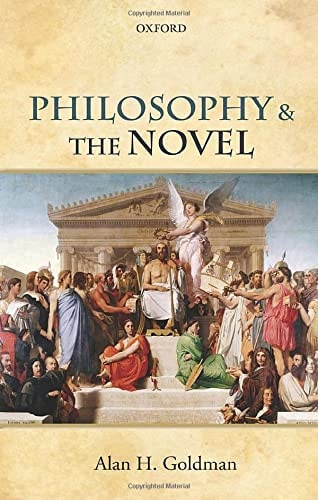
Philosophy and the Novel
0
0
As an Amazon Associate and affiliate partner, Menrva Books earns from qualifying purchases. Learn more
Author Description
Alan H. Goldman presents an original and lucid account of the relationship between philosophy and the novel. In the first part, on philosophy of novels, he defends theories of literary value and interpretation. Literary value, the value of literary works as such, is a species of aesthetic value. Goldman argues that works have aesthetic value when they simultaneously engage all our mental capacities: perceptual, cognitive, imaginative, and emotional. This view contrasts with now prevalent narrower formalist views of literary value. According to it, cognitive engagement with novels includes appreciation of their broad themes and the theses these imply, often moral and hence philosophical theses, which are therefore part of the novels' literary value. Interpretation explains elements of works so as to allow readers maximum appreciation, so as to maximize the literary value of the texts as written. Once more, Goldman's view contrasts with narrower views of literary interpretation, especially those which limit it to uncovering what authors intended. One implication of Goldman's broader view is the possibility of incompatible but equally acceptable interpretations, which he explores through a discussion of rival interpretations of Ernest Hemingway's The Sun Also Rises. Goldman goes on to test the theory of value by explaining the immense appeal of good mystery novels in its terms. The second part of the book, on philosophy in novels, explores themes relating to moral agency--moral development, motivation, and disintegration--in Jane Austen's Pride and Prejudice, Mark Twain's Huckleberry Finn, John Irving's The Cider House Rules, and Joseph Conrad's Nostromo. By narrating the course of characters' lives, including their inner lives, over extended periods, these novels allow us to vicariously experience the characters' moral progressions, positive and negative, to learn in a more focused way moral truths, as we do from real life experiences.
Menrva's Summary
THE THESIS
How do novels function as vehicles for philosophical inquiry and aesthetic value? Alan H. Goldman, a scholar of philosophy, constructs a framework that bridges the gap between literary theory and moral philosophy. He argues that the value of a novel lies in its ability to engage the full spectrum of human mental capacities—perceptual, cognitive, imaginative, and emotional—rather than relying on narrow formalist definitions. By examining both the nature of literary interpretation and the moral agency of characters, Goldman posits that novels provide a unique, focused environment for exploring complex ethical truths.
THE SCOPE MAP
What You Will Find
- A theory of literary value that integrates aesthetic, cognitive, and emotional engagement.
- An analysis of interpretive methodologies, challenging the focus on authorial intent.
- Case studies of classic literature including Pride and Prejudice, Huckleberry Finn, The Cider House Rules, and Nostromo.
- An application of aesthetic theory to the genre of mystery novels.
THE AUTHORITY PERSPECTIVE
Scholars and critics recognize this work as a significant contribution to the philosophy of literature, particularly for its defense of cognitive engagement in aesthetic appreciation. Readers frequently note the clarity of Goldman's prose, which makes complex philosophical arguments accessible to both students of literature and philosophy.
Page Count:
224
Publication Date:
2016-05-28
Publisher:
Oxford University Press
ISBN-10:
0198768729
ISBN-13:
9780198768722
Philosophy
Non-Fiction
Literature
Literary Criticism
English fiction
In literature
Aesthetics
Community Tags
Other Editions(4)

Similar Books





Reader Comments
Share Your Thoughts
No comments yet. Be the first to share your thoughts!