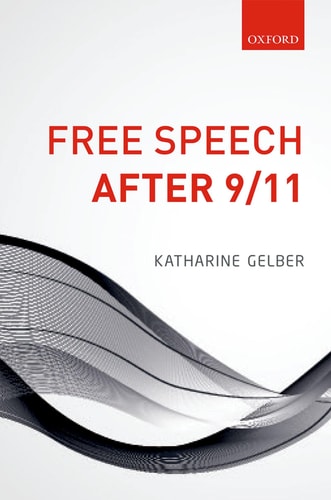
Free Speech After 9/11
0
0
As an Amazon Associate and affiliate partner, Menrva Books earns from qualifying purchases. Learn more
Author Description
Although there has been a lot written about how counter-terrorism laws impact on human rights and civil liberties, most of this work has focussed on the most obvious or egregious kinds of human rights abrogation, such as extended detention, torture, and extraordinary rendition. Far less has been written about the complex ways in which Western governments have placed new and far-reaching limitations on freedom of speech in this context since 9/11.This book compares three liberal democracies - the United States, the United Kingdom and Australia, in particular showing the commonalities and similarities in what has occurred in each country, and the changes in the appropriate parameters of freedom of speech in the counter-terrorism context since 9/11, achieved both in policy change and the justification for that change. In all three countries much speech has been criminalized in ways that were considered anachronistic, or inappropriate, in comparable policy areas prior to 9/11. This is particularly interesting because other works have suggested that the United States' unique protection of freedom of speech in the First Amendment has prevented speech being limited in that country in ways that have been pursued in others. This book shows that this kind of argument misses the detail of the policy change that has occurred, and privileges a textual reading over a more comprehensive policy-based understanding of the changes that have occurred.The author argues that we are now living a new-normal for freedom of speech, within which restrictions on speech that once would have been considered aberrant, overreaching, and impermissible are now considered ordinary, necessary, and justified as long as they occur in the counter-terrorism context. This change is persistent, and it has far reaching implications for the future of this foundational freedom.
Menrva's Summary
THE THESIS
This book investigates how counter-terrorism policies enacted after 9/11 have fundamentally altered the parameters and protections of free speech in Western liberal democracies. Katharine Gelber, an expert in political science and human rights, utilizes a comparative analysis of the United States, the United Kingdom, and Australia to challenge the assumption that constitutional protections, such as the First Amendment, have shielded citizens from speech restrictions. She argues that a new normal has emerged where previously impermissible limitations on expression are now accepted as standard practice under the guise of national security.
THE SCOPE MAP
What You Will Find
- Comparative analysis of counter-terrorism legislation in the US, UK, and Australia.
- Examination of the shift from traditional speech protections to modern criminalization of specific discourse.
- Critique of textualist legal interpretations versus comprehensive policy-based assessments.
- Evaluation of the long-term implications for foundational civil liberties in the post-9/11 era.
THE AUTHORITY PERSPECTIVE
Scholars and legal analysts frequently cite this work for its detailed examination of how policy shifts bypass traditional constitutional safeguards. Experts highlight the text as a significant contribution to the study of civil liberties, noting its rigorous approach to comparing international legislative trends.
Page Count:
200
Publication Date:
2016-06-14
Publisher:
Oxford University Press
ISBN-10:
0198777795
ISBN-13:
9780198777793
History
Human rights
Freedom of speech
Law
Sociology
Terrorism
Community Tags
Other Editions(2)

Similar Books