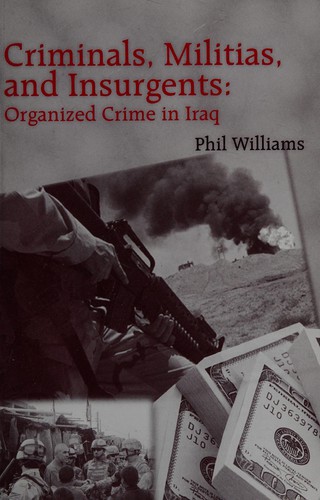
Criminals, Militias, and Insurgents
0
0
As an Amazon Associate and affiliate partner, Menrva Books earns from qualifying purchases. Learn more
Author Description
Dr. Williams looks in detail at major criminal activities, including the theft, diversion, and smuggling of oil, the kidnapping of both Iraqis and foreigners, extortion, car theft, and the theft and smuggling of antiquities. He also considers the critical role played by corruption in facilitating and strengthening organized crime and shows how al-Qaeda in Iraq, Jaish-al-Mahdi, and the Sunni tribes used criminal activities to fund their campaigns of political violence. Dr. Williams identifies the roots of organized crime in post-Ba’athist Iraq in an authoritarian and corrupt state dominated by Saddam Hussein and subject to international sanctions. He also explains the rise of organized crime after the U.S. invasion in terms of two distinct waves: the first wave followed the collapse of the state and was accompanied by the breakdown of social control mechanisms and the development of anomie; the second wave was driven by anarchy, insecurity, political ambition, and the imperatives of resource generation for militias, insurgents, and other groups. He also identifies necessary responses to organized crime and corruption in Iraq, including efforts to reduce criminal opportunities, change incentive structures, and more directly target criminal organizations and activities. His analysis also emphasizes the vulnerability of conflict and post-conflict situations to organized crime and the requirement for a holistic or comprehensive strategy in which security, development, and the rule of law complement one another.
Menrva's Summary
THE THESIS
The book investigates the intricate connections between organized crime, political violence, and state fragility in post-Ba'athist Iraq. Phil Williams, drawing on his expertise, details major criminal activities such as oil theft, kidnapping, extortion, and antiquities smuggling. He examines the pervasive role of corruption in enabling these crimes and how groups like al-Qaeda in Iraq, Jaish-al-Mahdi, and Sunni tribes utilized illicit activities to fund their insurgent campaigns. The analysis traces the origins of organized crime to Saddam Hussein's authoritarian regime and the impact of international sanctions, further exploring its evolution through two distinct waves following the U.S. invasion, driven by state collapse, anarchy, and the need for resource generation by various factions.
THE SCOPE MAP
- Detailed examination of specific criminal activities: oil theft, diversion, and smuggling; kidnapping of Iraqis and foreigners; extortion; car theft; antiquities theft and smuggling.
- Analysis of the critical role of corruption in facilitating and strengthening organized crime.
- Exploration of how al-Qaeda in Iraq, Jaish-al-Mahdi, and Sunni tribes used criminal activities to fund their political violence campaigns.
- Identification of the roots of organized crime in post-Ba'athist Iraq within the context of an authoritarian and corrupt state under Saddam Hussein and international sanctions.
- Explanation of the rise of organized crime after the U.S. invasion through two distinct waves: one following state collapse and breakdown of social control, and a second driven by anarchy, insecurity, political ambition, and resource generation imperatives.
- Identification of necessary responses to organized crime and corruption, including reducing criminal opportunities, altering incentive structures, and directly targeting criminal organizations.
- Emphasis on the vulnerability of conflict and post-conflict situations to organized crime.
- Argument for a holistic or comprehensive strategy integrating security, development, and the rule of law to combat organized crime.
THE AUTHORITY PERSPECTIVE
This book is regarded as a detailed and analytical examination of the complex interplay between criminal enterprises and political instability in Iraq. The author's in-depth look at specific criminal activities and their funding of insurgent groups provides a crucial understanding of the post-invasion landscape. The analysis of organized crime's roots in the pre-invasion state and its subsequent evolution offers a comprehensive historical and sociological perspective. The work underscores the necessity of integrated strategies to address both security and developmental challenges in conflict zones.
Page Count:
292
Publication Date:
2009-01-01
ISBN-10:
1584873973
Politics
History
Crime
Science
Non-Fiction
Community Tags
Similar Books