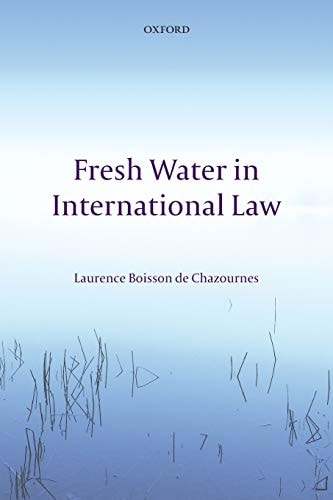
Fresh Water in International Law
0
0
As an Amazon Associate and affiliate partner, Menrva Books earns from qualifying purchases. Learn more
Author Description
This book addresses the diverse ways in which international law governs the uses, management, and protection of fresh water. The international law of fresh water is most comprehensively understood in the light of the different bodies of norms applicable to these varied uses and functions.The regulation of fresh water has primarily developed through the conclusion of treaties concerning international watercourses. Yet a number of other legal regimes also apply to the governance of fresh water. In particular, there has been an increasing recognition of the importance of fresh water to environmental protection. The development of international human rights law and international humanitarian law has also proven crucial for ensuring the sound and equitable management of this resource. In addition, the economic uses of fresh water feature prominently in the law applicable to watercourses, while water itself has become an important element of the trade and investment regimes. These bodies of rules and principles not only surface in an array of dispute settlement mechanisms, but also stimulate wider trends of institutionalization.The book investigates the origin and scope of these bodies of norms as they apply to fresh water, and demonstrates how they connect and adapt to one another, forming an integrated body of international principles. This approach is accompanied by a detailed analysis of the practice of states and of international organizations, taking into account the activities of the many non-state actors involved in the treatment of fresh water.
Menrva's Summary
THE THESIS
This book investigates the complex, multi-layered framework of international law governing the management, protection, and allocation of global fresh water resources. Laurence Boisson de Chazournes, a prominent scholar in international law, synthesizes various legal regimes—including environmental, human rights, humanitarian, and trade law—to demonstrate how these disparate rules coalesce into an integrated system. By analyzing state practice and the role of international organizations, the author provides a comprehensive overview of how legal norms adapt to the increasing scarcity and economic importance of water.
THE SCOPE MAP
What You Will Find
- Analysis of treaty-based governance for international watercourses.
- Examination of the intersection between human rights law and water management.
- Evaluation of trade and investment regimes as they pertain to water resources.
- Case studies and assessments of state practice and non-state actor involvement.
THE AUTHORITY PERSPECTIVE
Legal scholars and practitioners frequently cite this work as a foundational text for understanding the fragmentation and eventual integration of water-related international norms. Experts highlight the author's ability to bridge the gap between specialized environmental law and broader economic and humanitarian legal frameworks.
Page Count:
286
Publication Date:
2015-05-01
Publisher:
Oxford University Press
ISBN-10:
0198782756
ISBN-13:
9780198782759
Fresh Water
Law
Professional Career & Trade
Water Rights
Water Resources
International Law
Community Tags
Other Editions(4)

Similar Books





Reader Comments
Share Your Thoughts
No comments yet. Be the first to share your thoughts!