
Aeneid
0
0
As an Amazon Associate and affiliate partner, Menrva Books earns from qualifying purchases. Learn more
Author Description
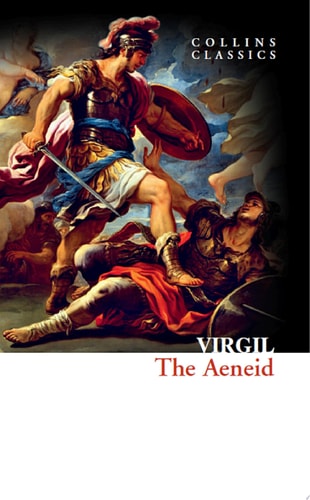
The Aeneid – thrilling, terrifying and poignant in equal measure – has inspired centuries of artists, writers and musicians.Virgil’s epic tale tells the story of Aeneas, a Trojan hero, who flees his city after its fall, with his father Anchises and his young son Ascanius – for Aeneas is destined to found Rome and father the Roman race. As Aeneas journeys closer to his goal, he must first prove his worth and attain the maturity necessary for such an illustrious task. He battles raging storms in the Mediterranean, encounters the fearsome Cyclopes, falls in love with Dido, Queen of Carthage, travels into the Underworld and wages war in Italy.
Menrva's Summary
THE PULSE
Following the destruction of Troy, the hero Aeneas must navigate divine wrath and mortal peril to fulfill his destiny as the founder of the Roman race. Driven by the command of the gods, Aeneas leads a band of survivors across the Mediterranean, facing environmental hazards and political opposition from hostile forces. His objective is to reach the Italian peninsula and establish a new home, a task that requires him to balance personal desire with the heavy burden of duty. The narrative employs a grand, elevated style, utilizing dactylic hexameter to recount the hero's trials, including his encounters with mythological creatures and his complex relationship with Queen Dido. The structure follows a non-linear progression, incorporating flashbacks and prophetic visions to connect the fall of Troy to the future glory of Rome.
INSIDE THE PAGES
- Use of dactylic hexameter verse form
- Heavy reliance on divine intervention and Olympian meddling
- Integration of Roman political propaganda and national myth-making
- Detailed descriptions of epic battles and naval disasters
- Exploration of the tension between personal piety and individual ambition
- Inclusion of a descent into the Underworld to reveal future history
- Characterization of Aeneas as the embodiment of Roman virtue
- Symbolic use of omens, dreams, and prophecies
THE COLLECTIVE ECHO
Discussion often centers on the moral complexity of Aeneas, as readers frequently debate whether his actions represent noble sacrifice or cold-hearted abandonment. Critics highlight the technical precision of the verse and the effectiveness of the poem in establishing a national identity for the Roman Empire. Many readers note the emotional weight of the Dido episode, which serves as a significant counterpoint to the hero's stoic mission. The work remains a primary subject of study for its influence on Western literature and its sophisticated use of mythological allusion. Scholars frequently emphasize how the text functions both as a narrative of individual struggle and a foundational document for imperial ideology.
Page Count:
351
Publication Date:
1970-11-01
Publisher:
Holt, R & W
ISBN-10:
0030085659
ISBN-13:
9780030085659
Adventure
Poetry
Roman
Roman History
Epic Poetry
Classical
Mythology
Classics
Themes & Styles
Community Tags
Other Editions(26)
Creative Media Partners, LLC
2025
Default edition
Independently published
2023

Shearsman Books
2023

Black Eagle Books
2020

Independently Published
2019

Independently Published
2017

Independently Published
2017

Faber & Faber
2016

Shearsman Books
2015

The Floating Press
2009
Perfection Learning Corporation
2009

IndyPublish.com
2008

Ebsco Publishing
2008

Impala Press
2006

Hackett Publishing
2005
Hackett Publishing Company
2005
Naxos Audio Books
2003

Random House
2002
Naxos Audio Books
2002

IndyPublish.com
2001
Blue Unicorn Edition, LLC
2000

Washington Square Press
1985
Holt, R & W
1970

UNKNO
1964

Penguin Publishing Group
1961
Oxford University Press
1900




Reader Comments
Share Your Thoughts
No comments yet. Be the first to share your thoughts!