World Population and Human Capital in the Twenty-First Century
0
0
As an Amazon Associate and affiliate partner, Menrva Books earns from qualifying purchases. Learn more
Author Description
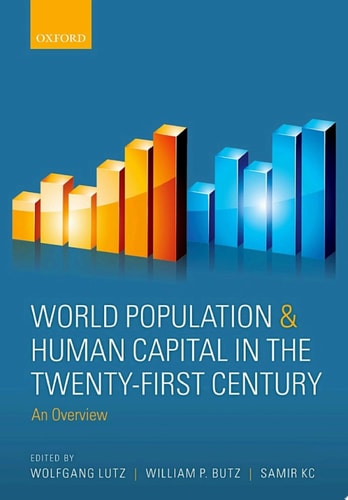
This book addresses systematically and quantitatively the role of educational attainment in global population trends and models. Six background chapters summarize past trends in fertility, mortality, migration, and education; examine relevant theories and identify key determining factors; and set the assumptions that are subsequently translated into alternative scenario projections to 2100. These assumptions derive from a global survey of hundreds of experts and five expert meetings on as many continents. Another chapter details their translation into multi-dimensional projections by age, sex, and level of education. The book's final chapters analyse the results, emphasizing alternative trends in human capital, new ways of studying ageing and the quantification of alternative population, and education pathways in the context of global sustainable development. An appendix and associated web link present detailed results for all countries. The book shows that adding education to age and sex substantially alters the way we see the future.
Menrva's Summary
THE THESIS
This book investigates how the integration of educational attainment into demographic modeling fundamentally alters our understanding of global population trends and future human capital development. The authors, Wolfgang Lutz, William P. Butz, and Samir KC, leverage extensive quantitative data and expert consensus to construct a multi-dimensional projection model that extends to the year 2100. By shifting the focus from simple age and sex cohorts to include education levels, the work provides a rigorous framework for assessing how human capital influences sustainable development pathways across different nations.
THE SCOPE MAP
What You Will Find
- Quantitative projections of global fertility, mortality, and migration trends through 2100.
- A methodology for incorporating educational attainment as a primary demographic variable.
- Data derived from a global survey of hundreds of experts and five continental expert meetings.
- Analysis of the relationship between human capital development and global sustainable development goals.
THE AUTHORITY PERSPECTIVE
Experts recognize this work as a foundational text for demographers and policy analysts interested in long-term population forecasting. Readers frequently note the technical density of the prose and the comprehensive nature of the statistical appendices provided for global country-level analysis.
Page Count:
1072
Publication Date:
2017-06-27
Publisher:
Oxford University Press
ISBN-10:
0198796250
ISBN-13:
9780198796251
Economics
Politics
Demography
Education
Statistics
Sociology
Global Studies
DemographyPopulation
Community Tags
Similar Books