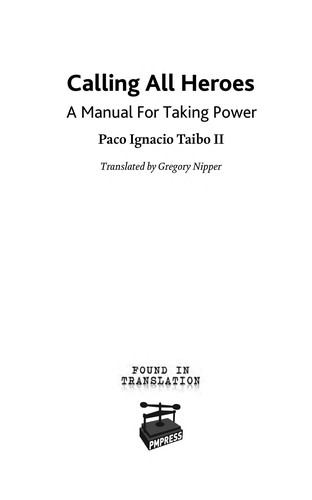
Calling All Heroes
0
0
As an Amazon Associate and affiliate partner, Menrva Books earns from qualifying purchases. Learn more
Author Description
The euphoric idealism of grassroots reform and the tragic reality of revolutionary failure are at the center of this speculative novel that opens with a real historical event. On October 2, 1968, 10 days before the Summer Olympics in Mexico, the Mexican government responds to a student demonstration in Tlatelolcothe by firing into the crowd, killing more than 200 students and civilians and wounding hundreds more. The massacre does not receive much international attention and though many students are detained, no officials are held accountable. The story then skips ahead two years to a hospital in Mexico City and introduces Nestor, a fictional journalist who witnessed the shootings at Tlatelolcothe. He has been admitted to the hospital for a knife wound, and as he lies in bed, his fevered imagination goes back to the day of the riot. In his delirious state, he becomes so desperate he calls on the heroes of his youth?Sherlock Holmes, Doc Holliday, Wyatt Earp, and D'Artagnan among them?to join him in launching a new movement of reform.
Menrva's Summary
THE PULSE
A massacre of student protestors in Mexico City ignites a fevered journalist's call for fictional heroes to inspire a new reform movement. Two years after witnessing the Tlatelolco massacre, journalist Nestor lies in a hospital bed, his fevered imagination conjuring the heroes of his youth—Sherlock Holmes, Doc Holliday, Wyatt Earp, and D'Artagnan—to join him in a desperate call for reform. The novel opens with the real historical event of October 2, 1968, where the Mexican government's violent response to a student demonstration resulted in hundreds of deaths and no official accountability. Nestor's delirious state blurs the lines between reality and fantasy as he seeks to galvanize these iconic figures to combat the inertia and corruption he perceives.
INSIDE THE PAGES
- Opening with the real historical event of the Tlatelolco massacre on October 2, 1968.
- Introduction of Nestor, a fictional journalist who witnessed the massacre.
- Nestor's hospitalization and subsequent fevered, hallucinatory state.
- The invocation of fictional heroes from literature and history to inspire reform.
- Exploration of the contrast between idealistic reform and revolutionary failure.
- Speculative elements blending historical events with fictional characters.
- Themes of political corruption, historical memory, and the power of narrative.
THE COLLECTIVE ECHO
The novel is characterized by its speculative approach to historical events, blending the idealism of grassroots reform with the stark realities of revolutionary outcomes. The premise sets up a narrative that questions the efficacy of historical and fictional archetypes in motivating contemporary change. The author's use of a real historical tragedy as a backdrop for a fictional journalist's fevered call to action suggests a focus on the psychological and societal impact of political violence. The narrative framework, as described, appears to weave together historical fact, journalistic perspective, and imaginative fantasy.
Page Count:
120
Publication Date:
2010-01-01
ISBN-10:
160486205X
ISBN-13:
9781604862058
History
Historical Fiction
Fiction
Political fiction
Speculative Fiction
Community Tags
Similar Books