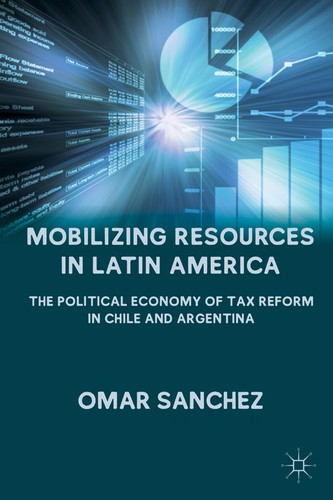
Mobilizing Resources in Latin America
0
0
As an Amazon Associate and affiliate partner, Menrva Books earns from qualifying purchases. Learn more
Author Description
Why do some countries "learn to tax" and others do not? And, why does tax reform consolidate in some countries and not in others? The importance of these queries for the developing world and for Latin America cannot be exaggerated. This book tracks the evolution of tax policy in Chile and Argentina in order to shed light on these questions, providing a unique window into the nature of tax policymaking in Latin America. In the process, broader insights are gained into the larger question about why Chile has become the "tiger" economy of the region while Argentina has been such a persistent economic underachiever
Menrva's Summary
THE THESIS
This book investigates why some Latin American nations successfully implement tax reforms and achieve economic growth, while others falter. It examines the evolution of tax policy in Chile and Argentina to illuminate the dynamics of tax policymaking in the region, offering insights into Chile's economic success and Argentina's persistent underachievement.
THE SCOPE MAP
- Comparative analysis of tax policy evolution in Chile and Argentina.
- Examination of factors enabling successful tax reform and consolidation.
- Exploration of reasons behind divergent economic performance in the region.
- Case studies on the nature of tax policymaking in Latin America.
THE AUTHORITY PERSPECTIVE
The book is positioned as a comparative study of economic policy in Latin America, focusing on the critical role of taxation in national development. Its analysis of Chile and Argentina aims to provide a framework for understanding economic divergence within the region. The framing suggests a detailed examination of policy implementation and its outcomes, likely appealing to specialists in economics and political science.
Page Count:
245
Publication Date:
2011-01-01
ISBN-10:
0230114466
ISBN-13:
9780230114463
History
Non-Fiction
Economics
Science
Business
Latin America
Taxation
Comparative Politics
Public Policy
Community Tags
Similar Books