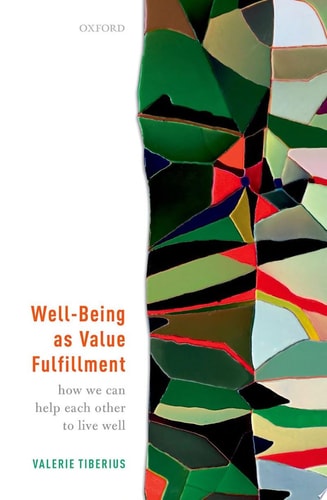
Well-Being as Value Fulfillment: How We Can Help Each Other to Live Well
0
0
As an Amazon Associate and affiliate partner, Menrva Books earns from qualifying purchases. Learn more
Author Description
What is human well-being? Valerie Tiberius argues that our lives go well to the extent that we succeed in terms of what matters to us emotionally, reflectively, and over the long term. In other words, well-being consists in fulfilling or realizing our appropriate values over time. In the first half of this book, Tiberius sets out the theory of well-being as value fulfilment. She explains what valuing is and what it is to fulfill values over time. In the second half of the book she applies the theory to the problem of how to help others, particularly our friends. We don't always know how to provide the help we know others need; but we also have the problem of knowing what help they need in the first place, and this is a problem that requires ethical thinking. Tiberius argues that when we want to help others achieve greater well-being, we should pay attention to their values. This entails attending to how others' values fit together, how they understand what it means to succeed in terms of these values, and how things could change for them over time. Being a good and helpful friend, then, requires cultivating some habits of humility that overcome our tendency to think we know what's good for other people without really understanding what it's like to be them.
Menrva's Summary
THE THESIS
How can individuals achieve a meaningful sense of well-being while effectively supporting the values of those around them? Valerie Tiberius, a professor of philosophy, utilizes a framework of value fulfillment to bridge the gap between personal satisfaction and interpersonal ethics. She argues that well-being is not a static state but a dynamic process of realizing one's long-term values, and that helping others requires a disciplined, humble approach to understanding their unique value systems.
THE SCOPE MAP
What You Will Find
- A theoretical framework defining well-being as the fulfillment of values over time.
- An analysis of the psychological and reflective components of what it means to value something.
- Practical ethical strategies for providing support to friends and peers.
- A discussion on the habits of humility necessary to avoid paternalistic assumptions in interpersonal relationships.
THE AUTHORITY PERSPECTIVE
Experts in moral philosophy and ethics recognize this work as a significant contribution to the study of well-being and interpersonal relationships. Readers frequently note the clarity of the prose, which makes complex philosophical concepts accessible to both academic and general audiences.
Page Count:
240
Publication Date:
2018-12-25
Publisher:
Oxford University Press
ISBN-10:
0198809492
ISBN-13:
9780198809494
Philosophy
Psychology
Values
Happiness
Ethics
Self Help
Community Tags
Similar Books