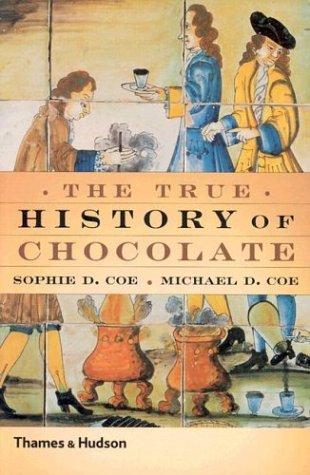
The True History of Chocolate
0
0
As an Amazon Associate and affiliate partner, Menrva Books earns from qualifying purchases. Learn more
Author Description
The food of the gods": Delicious indulgence or cause of migraines? Aphrodisiac or medicinal tonic? Religious symbol or Mesoamerican currency? This tale of one of the world's favorite foods draws upon botany, archaeology, socioeconomics and culinary history to present for the first time a complete and accurate history of chocolate. The story begins some 3000 years ago in the jungles of lowland Mexico and Central America, with the tree Theobroma cacao and the complex processes necessary to transform its bitter seeds into a beverage. Chocolate was consumed in generally unsweetened liquid form and used as currency by the sophisticated Maya, and the Aztecs after them. The Spanish conquest of Central America introduced chocolate to Europe as a luxury item; then industrialization made it a food for the masses. From Maya hieroglyphs to the Hershey Bar, this is a fascinating history, enhanced with quotations, illustrations and old recipes.--From publisher description.
Menrva's Summary
THE THESIS
This book investigates the multifaceted history of chocolate, tracing its origins from ancient Mesoamerica to its global proliferation. The authors, drawing on botany, archaeology, and socioeconomics, detail the complex transformation of the cacao bean into a beverage by sophisticated civilizations like the Maya and Aztecs, who also utilized chocolate as currency. The narrative then follows chocolate's introduction to Europe as a luxury item after the Spanish conquest and its subsequent evolution into a food for the masses through industrialization. The book spans from ancient hieroglyphs to modern chocolate bars, offering a comprehensive account of this beloved food.
THE SCOPE MAP
- The origins of the cacao tree and its cultivation in ancient Mexico and Central America.
- The consumption of chocolate as an unsweetened beverage by the Maya and Aztecs.
- The use of chocolate as currency in Mesoamerican societies.
- Chocolate's introduction to Europe and its transformation into a luxury good.
- The impact of industrialization on chocolate production and consumption.
- Insights from botany, archaeology, socioeconomics, and culinary history.
- Illustrations and historical recipes related to chocolate.
THE AUTHORITY PERSPECTIVE
The book is regarded as a comprehensive and fascinating account of chocolate's history, drawing on a wide array of disciplines. Its detailed exploration from ancient origins to mass consumption is noted for its thoroughness. The inclusion of historical recipes and illustrations further enhances its appeal as a rich historical document. The work is appreciated for its ability to connect botanical, archaeological, and social histories to the story of a globally popular food.
Page Count:
280
Publication Date:
2000-01-01
ISBN-10:
0500282293
ISBN-13:
9780500282298
Cooking
Non-Fiction
History
Culinary History
Anthropology
Community Tags
Similar Books