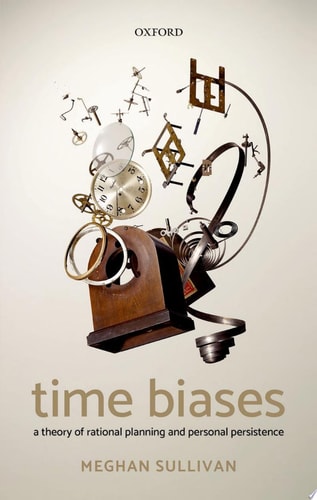
Time Biases: A Theory of Rational Planning and Personal Persistence
0
0
As an Amazon Associate and affiliate partner, Menrva Books earns from qualifying purchases. Learn more
Author Description
Should you care less about your distant future? What about events in your life that have already happened? How should the passage of time affect your planning and assessment of your life? Most of us think it is irrational to ignore the future but completely harmless to dismiss the past. But this book argues that rationality requires temporal neutrality: if you are rational you don't engage in any kind of temporal discounting. The book draws on puzzles about real-life planning to build the case for temporal neutrality. How much should you save for retirement? Does it make sense to cryogenically freeze your brain after death? How much should you ask to be compensated for a past injury? Will climate change make your life meaningless? Meghan Sullivan considers what it is for you to be a person extended over time, how time affects our ability to care about ourselves, and all of the ways that our emotions might bias our rational planning. Drawing substantially from work in social psychology, economics and the history of philosophy, the book offers a systematic new theory of rational planning.
Menrva's Summary
THE THESIS
Does rationality demand that we treat all moments of our lives with equal importance, regardless of their temporal distance? Meghan Sullivan, a professor of philosophy, investigates the normative requirements of rational planning by challenging the common intuition that we should discount the past or prioritize the immediate future. She constructs a systematic theory of temporal neutrality, arguing that a rational agent should value their life stages equally, and supports this framework by integrating insights from social psychology, behavioral economics, and historical philosophical discourse.
THE SCOPE MAP
What You Will Find
- A rigorous philosophical defense of temporal neutrality in decision-making.
- Analysis of real-world planning dilemmas including retirement savings, cryogenic preservation, and compensation for past injuries.
- Synthesis of empirical data from social psychology and economic models of discounting.
- A conceptual framework for understanding personal persistence and the self extended over time.
THE AUTHORITY PERSPECTIVE
Experts recognize this work as a significant contribution to the intersection of ethics and decision theory, noting its ability to bridge abstract philosophical concepts with practical life planning. Readers frequently highlight the clarity of the prose, which makes complex arguments regarding temporal bias accessible to those outside of professional philosophy.
Page Count:
208
Publication Date:
2018-08-28
Publisher:
Oxford University Press
ISBN-10:
0198812841
ISBN-13:
9780198812845
Non-Fiction
Psychology
Philosophy
Economics
Planning
Rationality
Time
Ethics
Community Tags
Similar Books