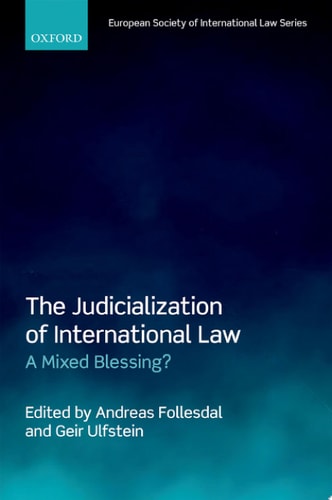
The Judicialization of International Law: A Mixed Blessing?
0
0
As an Amazon Associate and affiliate partner, Menrva Books earns from qualifying purchases. Learn more
Author Description
The influence of international courts is ubiquitous, covering areas from the law of the sea to international criminal law. This judicialization of international law is often lauded for bringing effective global governance, upholding the rule of law, and protecting the right of individuals. Yet at what point does the omnipresence of the international judiciary shackle national sovereign freedom? And can the lack of political accountability be justified?Follesdal and Ulfstein bring together the creme de la creme of the legal academic world to ask the big questions for the international judiciary: whether they are there for mere dispute settlement or to set precedent, and how far they can enforce international obligations without impacting on democratic self-determination.
Menrva's Summary
THE THESIS
This volume investigates whether the increasing judicialization of international law serves as a beneficial mechanism for global governance or an overreach that undermines national sovereignty. Editors Andreas Follesdal and Geir Ulfstein curate a collection of essays from prominent legal scholars to examine the tension between international judicial authority and democratic self-determination. The text evaluates the legitimacy, accountability, and functional roles of international courts in a globalized legal landscape.
THE SCOPE MAP
What You Will Find
- Analysis of the expansion of international courts across diverse legal domains including the law of the sea and criminal law.
- Theoretical frameworks for assessing the balance between judicial precedent and national sovereign freedom.
- Comparative studies on the political accountability of international judicial bodies.
- Critical inquiry into the role of international courts as dispute settlement mechanisms versus law-making entities.
THE AUTHORITY PERSPECTIVE
Legal scholars and practitioners frequently cite this work as a foundational text for understanding the structural challenges facing modern international tribunals. Experts highlight the academic rigor of the contributors and the balanced approach taken toward the complex intersection of global law and domestic policy.
Page Count:
288
Publication Date:
2018-05-29
Publisher:
Oxford University Press
ISBN-10:
0198816421
ISBN-13:
9780198816423
Governance
Human rights
Justice Administration of
Law
International Law
Community Tags
Similar Books