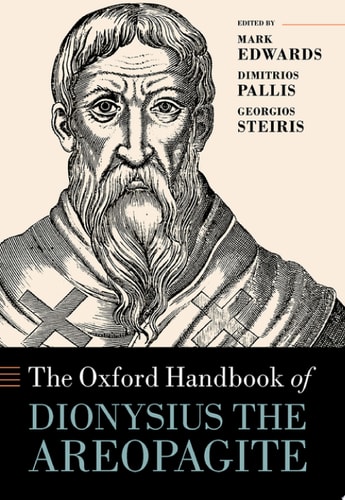
The Oxford Handbook of Dionysius the Areopagite
0
0
As an Amazon Associate and affiliate partner, Menrva Books earns from qualifying purchases. Learn more
Author Description
This Handbook contains forty essays by an international team of experts on the antecedents, the content, and the reception of the Dionysian corpus, a body of writings falsely ascribed to Dionysius the Areopagite, a convert of St Paul, but actually written about 500 AD. The first section contains discussions of the genesis of the corpus, its Christian antecedents, and its Neoplatonic influences. In the second section, studies on the Syriac reception, the relation of the Syriac to the original Greek, and the editing of the Greek by John of Scythopolis are followed by contributions on the use of the corpus in such Byzantine authors as Maximus the Confessor, John of Damascus, Theodore the Studite, Niketas Stethatos, Gregory Palamas, and Gemistus Pletho. In the third section attention turns to the Western tradition, represented first by the translators John Scotus Eriugena, John Sarracenus, and Robert Grosseteste and then by such readers as the Victorines, the early Franciscans, Albert the Great, Aquinas, Bonaventure, Dante, the English mystics, Nicholas of Cusa, and Marsilio Ficino. The contributors to the final section survey the effect on Western readers of Lorenzo Valla's proof of the inauthenticity of the corpus and the subsequent exposure of its dependence on Proclus by Koch and Stiglmayr. The authors studied in this section include Erasmus, Luther and his followers, Vladimir Lossky, Hans Urs von Balthasar, and Jacques Derrida, as well as modern thinkers of the Greek Church. Essays on Dionysius as a mystic and a political theologian conclude the volume.
Menrva's Summary
THE THESIS
This volume investigates the historical origins, philosophical content, and extensive intellectual reception of the Dionysian corpus, a collection of writings attributed to Dionysius the Areopagite. The editors, Dimitrios Pallis, Georgios Steiris, and Mark G. Edwards, assemble an international team of scholars to analyze how these texts, composed around 500 AD, functioned as a bridge between Neoplatonic thought and Christian theology. The work provides a comprehensive framework for understanding the corpus's influence across Byzantine, Western, and modern intellectual traditions.
THE SCOPE MAP
What You Will Find
- Analysis of the genesis of the Dionysian corpus and its Neoplatonic and Christian antecedents.
- Examination of the Syriac reception and the editorial contributions of John of Scythopolis.
- Historical survey of the corpus's impact on major Western thinkers including Aquinas, Dante, and Nicholas of Cusa.
- Critical evaluation of the modern scholarly consensus regarding the corpus's inauthenticity and its subsequent influence on figures like Jacques Derrida.
THE AUTHORITY PERSPECTIVE
Experts identify this handbook as a definitive reference for scholars of late antiquity and medieval philosophy. Readers frequently note the academic density of the prose, which provides a rigorous and exhaustive examination of the subject matter.
Page Count:
752
Publication Date:
2022-05-25
Publisher:
Oxford University Press
ISBN-10:
0198810792
ISBN-13:
9780198810797
Religion
History
Philosophy
Theology
Christianity
Neoplatonism
Community Tags
Similar Books