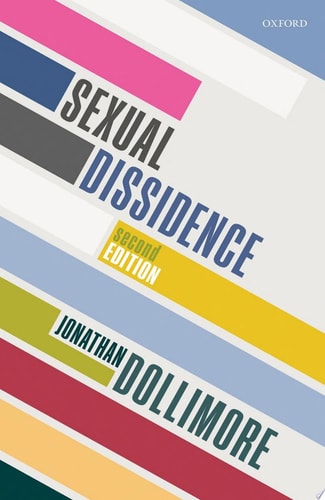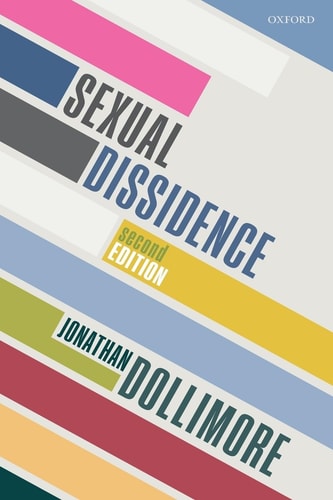
Sexual Dissidence
0
0
As an Amazon Associate and affiliate partner, Menrva Books earns from qualifying purchases. Learn more
Author Description
Why is homosexuality socially marginal yet symbolically central? Why, in other words, is it so strangely integral to the very societies which obsessively denounce it, and why is it history - history rather than human nature - which has produced this paradoxical position?These are just some of the questions explored in this wide-ranging study of sexual dissidence which returns to the early modern period in order to focus, question, and develop issues of postmodernity. In the process it brilliantly links writers as diverse as Shakespeare, Gide, Wilde, and Genet, and cultural critics as different as St. Augustine, Freud, Fanon, Foucault, and Monique Wittig. So Freud's theory of perversion is discovered to be more challenging than either his critics or his advocates usually allow, especially when approached via the earlier period's archetypal perverts, the religious heretic and the wayward woman, Satan and Eve.The book further shows how the literature, histories, and sub-cultures of sexual and gender dissidence prove remarkably illuminating for current debates in literary theory, psychoanalysis, and cultural materialism. It includes chapters on transgression and its containment, contemporary theories of sexual difference, homophobia, the gay sensibility, transvestite literature in the culture and theatre of Renaissance England, homosexuality, and race.
Menrva's Summary
THE THESIS
This study investigates the paradoxical social position of homosexuality, questioning why it remains symbolically central to the very societies that marginalize it. Jonathan Dollimore, a prominent scholar in cultural materialism and Renaissance literature, utilizes a historical framework to challenge essentialist views of human nature. By analyzing the intersection of early modern history and postmodern theory, he argues that sexual dissidence is a product of historical construction rather than innate biological truth.
THE SCOPE MAP
What You Will Find
- Analysis of historical figures and archetypes including Satan, Eve, and the religious heretic.
- Theoretical frameworks drawn from Freud, Foucault, Fanon, and Monique Wittig.
- Examination of Renaissance theatre, transvestite literature, and the gay sensibility.
- Critical exploration of the relationship between sexual difference, race, and cultural containment.
THE AUTHORITY PERSPECTIVE
Scholars and critics frequently cite this work as a foundational text for understanding the intersection of queer theory and cultural materialism. Readers often note the academic density of the prose, which requires a strong background in critical theory to fully synthesize the author's complex arguments.
Page Count:
464
Publication Date:
2020-06-23
Publisher:
Oxford University Press
ISBN-10:
0198827067
ISBN-13:
9780198827061
Politics
Philosophy
History
Criticism & Theory
Sociology
LGBTQ Studies
English
Paraphilias
New Used & Rental Textbooks
British & Irish
English & College Success
Gender Studies
Literary theory