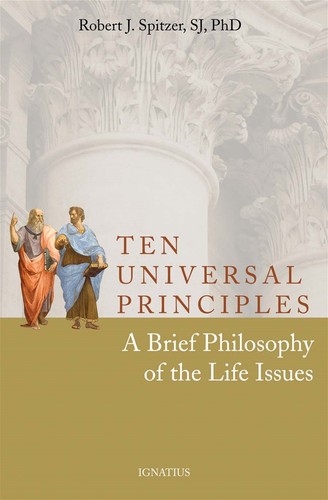
Ten Universal Principles
0
0
As an Amazon Associate and affiliate partner, Menrva Books earns from qualifying purchases. Learn more
Author Description
How do we make sense of life? How should we treat others? How should we reasonably be expected to be treated by others? When human life is at stake, are there reasonable principles we can rely on to guide our actions? How should our laws be framed to protect human life? What kind of society should be built? questions. But not everyone accepts the same religious premises or recognizes the same spiritual authorities. Are there "public arguments" --reasons that can be given that do not presuppose agreement on religious grounds or common religious commitments--that can guide our thoughts and actions, as well as our laws and public policies? In Ten Universal Principles: A Brief Philosophy of the Life Issues, Jesuit Father Robert Spitzer sets out, in a brief, yet highly-readable and lucid style, ten basic principles that must govern the reasonable person's thinking and acting about life issues. A highly-regarded philosopher, Father Spitzer provides an intelligent outline for thinking and talking about human life. This book is a powerful tool for persuasively articulating and effectively inculturating a prolife philosophy."--Cover [page 4].
Menrva's Summary
THE THESIS
This book explores ten fundamental principles that can guide rational thought and action on life issues, irrespective of religious or spiritual commitments. Robert J. Spitzer, a respected philosopher, presents a clear and accessible framework for understanding complex ethical questions concerning human life. The work aims to provide a basis for public arguments that do not rely on shared religious beliefs, offering principles applicable to personal conduct, legal frameworks, and societal development. It serves as a guide for articulating and promoting a philosophy centered on the value of human life.
THE SCOPE MAP
- What constitutes a reasonable approach to life issues.
- Principles for treating others and being treated by others.
- Guidance for actions when human life is at stake.
- Frameworks for framing laws to protect human life.
- Principles for building a just society.
- Arguments for a prolife philosophy that do not presuppose religious agreement.
- A lucid and readable outline for thinking and talking about human life.
THE AUTHORITY PERSPECTIVE
The book is presented as a tool for articulating and inculturating a prolife philosophy, offering a rational basis for discussions on life issues. It aims to provide principles that can guide individuals, laws, and public policy, even among those with differing religious views. The author's philosophical background is highlighted as lending credibility to the outlined principles. The work is described as a powerful resource for persuasive communication on these sensitive topics.
Page Count:
155
Publication Date:
2011-01-01
ISBN-10:
1586174754
ISBN-13:
9781586174750
Philosophy
Non-Fiction
Ethics
Public Policy
Community Tags
Similar Books