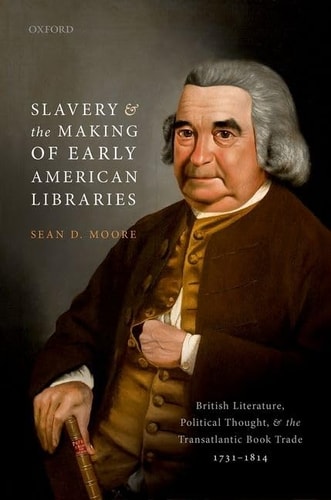
Slavery and the Making of Early American Libraries: British Literature, Political Thought, and the Transatlantic Book Trade, 1731-1814
0
0
As an Amazon Associate and affiliate partner, Menrva Books earns from qualifying purchases. Learn more
Author Description
Early American libraries stood at the nexus of two transatlantic branches of commerce―the book trade and the slave trade. Slavery and the Making of Early American Libraries bridges the study of these trades by demonstrating how Americans' profits from slavery were reinvested in imported British books and providing evidence that the colonial book market was shaped, in part, by the demand of slave owners for metropolitan cultural capital. Drawing on recent scholarship that shows how participation in London cultural life was very expensive in the eighteenth century, as well as evidence that enslavers were therefore some of the few early Americans who could afford to import British cultural products, the volume merges the fields of the history of the book, Atlantic studies, and the study of race, arguing that the empire-wide circulation of British books was underwritten by the labour of the African diaspora.The volume is the first in early American and eighteenth-century British studies to fuse our growing understanding of the material culture of the transatlantic text with our awareness of slavery as an economic and philanthropic basis for the production and consumption of knowledge. In studying the American dissemination of works of British literature and political thought, it claims that Americans were seeking out the forms of citizenship, constitutional traditions, and rights that were the signature of that British identity. Even though they were purchasing the sovereignty of Anglo-Americans at the expense of African-Americans through these books, however, some colonials were also making the case for the abolition of slavery.
Menrva's Summary
THE THESIS
This book investigates the economic and cultural intersection between the transatlantic slave trade and the development of early American libraries between 1731 and 1814. Sean D. Moore, a scholar of eighteenth-century literature, utilizes archival records of book imports and financial data to argue that the accumulation of wealth from enslaved labor directly funded the acquisition of British cultural capital. By examining the consumption of political and literary texts, the author demonstrates how the intellectual foundations of American identity were inextricably linked to the profits of the African diaspora.
THE SCOPE MAP
What You Will Find
- Analysis of the transatlantic book trade and its financial dependency on slave-produced wealth.
- Examination of how British political thought and literature shaped the American concept of citizenship.
- Evidence derived from colonial library records, import manifests, and historical economic data.
- A synthesis of Atlantic studies, material culture, and the history of the book.
THE AUTHORITY PERSPECTIVE
Scholars in the fields of Atlantic history and book studies identify this work as a significant contribution to understanding the material foundations of colonial intellectual life. Readers frequently note the academic density of the prose and the depth of the archival research presented by the author.
Page Count:
288
Publication Date:
2019-04-28
Publisher:
Oxford University Press
ISBN-10:
0198836376
ISBN-13:
9780198836377
History
United States
American History
Industries history
English literature
Slavery
Literary Criticism
Political Thought
Book History
Libraries history
Indigenous
Atlantic Studies
Community Tags
Similar Books