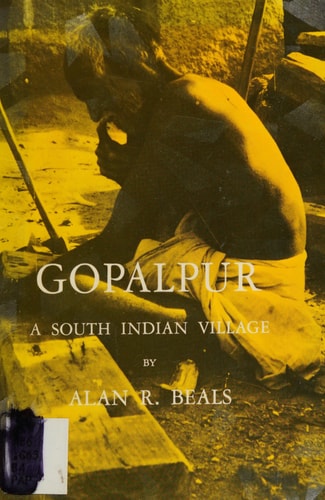
Gopalpur: A South Indian Village
0
0
As an Amazon Associate and affiliate partner, Menrva Books earns from qualifying purchases. Learn more
Author Description
The problems of life in Gopalpur are understandable. From the Western point of view, the ways in which they are solved seem strange. How do wrestling matches between young men from different villages in the Gopalpur area help make social and economic relations between these villages smoother? Why is the preferred marital partner one's sister's daughter or cross cousin? What useful purpose can the saltmakers' cast serve when saltmakers make no salt? How are the strong forces making for competition and conflict in Gopalpur contained and controlled, so that crucial areas of cooperation are not destroyed? These are some of the many questions answered in this case study that make it fascinating reading.
Menrva's Summary
THE THESIS
This case study investigates how the social, economic, and cultural structures of a South Indian village function to maintain stability despite internal competition and external pressures. Alan R. Beals, an anthropologist with extensive field experience, utilizes ethnographic observation to analyze the specific customs of Gopalpur. The text argues that seemingly idiosyncratic practices, such as specific marriage patterns and caste roles, serve logical functions in preserving the village's social cohesion.
THE SCOPE MAP
What You Will Find
- Analysis of inter-village social and economic relations
- Examination of kinship systems and marriage preferences
- Study of caste dynamics and occupational roles
- Investigation of conflict resolution mechanisms
Scope Limits
- The text focuses specifically on the Gopalpur region and does not provide a comprehensive overview of all South Indian cultural practices
- The study reflects the anthropological methodologies and perspectives prevalent during the period of the author's fieldwork
THE AUTHORITY PERSPECTIVE
Experts frequently cite this work as a classic example of the case study method in cultural anthropology, noting its accessibility for students. Readers often highlight the author's ability to translate complex social behaviors into understandable logical frameworks.
Page Count:
99
Publication Date:
1962-01-01
Publisher:
Holt, Rinehart & Winston, Incorporated
ISBN-10:
0030114608
ISBN-13:
9780030114601
Social Science
India
Sociology
Anthropology
Ethnography
Community Tags
Similar Books