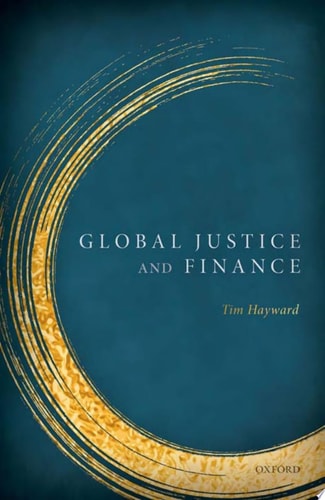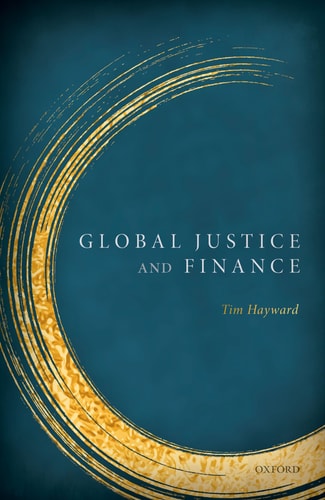
Global Justice & Finance
0
0
As an Amazon Associate and affiliate partner, Menrva Books earns from qualifying purchases. Learn more
Author Description
Can global justice be promoted by distributing money more equitably? Could even relatively small financial sacrifices by the affluent work, through benign leverage, to achieve that goal? Global Justice and Finance casts new light on such questions by considering what is presupposed about finance. Redistributive proposals assume money to be a reliable measure, store of value, and medium of exchange. Yet maintaining stable interest, inflation, and exchange rates in a dynamic capitalist economy is a considerable achievement involving a complex financial system. Such global coordination could, if so directed, contribute immensely to humanity's betterment, yet under the direction of a profit seeking elite it leaves a majority disempowered, impoverished, and indebted. To pay debts, ever more desperate measures to wrest value from the world's natural resources increase ecological pressures to harmful extremes, and those pressures do not stop short of driving wars. The profit seeking economy is held in place by the complex legal arrangements that constitute finance. Globally, there has developed, unannounced and unaccountably, what amounts to a privatised constitution - binding agreements that transcend sovereign jurisdictions. Hopes of redirecting the financial assets created within this system, by means of modest reforms, towards objectives of social justice and ecological sustainability may prove illusory. To achieve such objectives arguably requires the constitution of a global normative order guided by public and political decision-making. The achievement of a publicly accountable constitutional order that is superordinate to the financial system might be regarded as a revolutionary transformation.
Menrva's Summary
THE THESIS
Can global justice be achieved through the redistribution of financial assets, or does the current global financial system require a fundamental constitutional transformation to serve the public interest? Tim Hayward, a scholar of political theory, examines the intersection of global finance, ecological sustainability, and social justice. He argues that the existing financial system, governed by a private, unaccountable constitution, inherently prioritizes profit over human and environmental well-being, necessitating a shift toward a publicly accountable global normative order.
THE SCOPE MAP
What You Will Find
- Analysis of the structural relationship between global financial systems and sovereign jurisdictions.
- Critique of the 'privatised constitution' that governs international financial agreements.
- Examination of the link between debt-driven economic models and ecological degradation.
- Theoretical framework for transitioning from profit-seeking financial control to public political decision-making.
THE AUTHORITY PERSPECTIVE
Scholars and political theorists frequently note the dense, analytical nature of Hayward's prose as he navigates complex intersections of law and economics. Experts highlight this work as a significant contribution to the discourse on global governance and the limitations of incremental financial reform.
Page Count:
240
Publication Date:
2019-10-01
Publisher:
Oxford University Press
ISBN-10:
0198842767
ISBN-13:
9780198842767
Economics
Philosophy
Finance
Globalization
Social justice