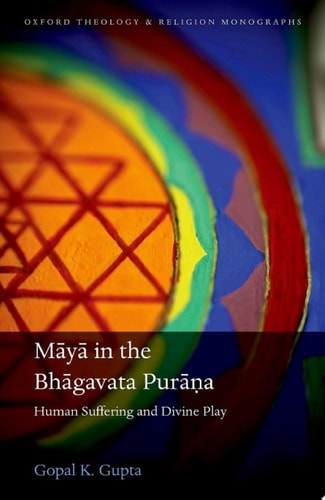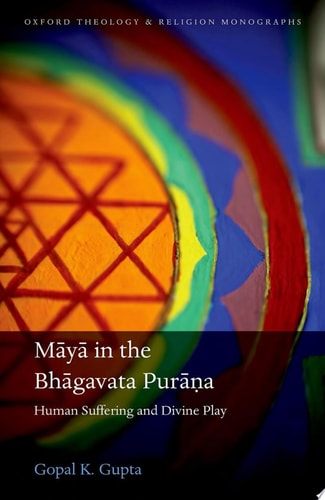
Maya in the Bhagavata Purana: Human Suffering and Divine Play
0
0
As an Amazon Associate and affiliate partner, Menrva Books earns from qualifying purchases. Learn more
Author Description
The idea of Māyā pervades Indian philosophy. It is enigmatic, multivalent, and foundational, with its oldest referents found in the Rig Veda. This book explores Māyā's rich conceptual history, and then focuses on the highly developed theology of Māyā found in the Sanskrit Bhāgavata Purāṇa, one of the most important Hindu sacred texts. Gopal K. Gupta examines Māyā's role in the Bhāgavata's narratives, paying special attention to its relationship with other key concepts in the text, such as human suffering (duḥkha), devotion (bhakti), and divine play (līlā). In the Bhāgavata, Māyā is often identified as the divine feminine, and has a far-reaching influence. For example, Māyā is both the world and the means by which God creates the world, as well as the facilitator of God's play, paradoxically revealing him to his devotees by concealing his majesty. While Vedānta philosophy typically sees Māyā as a negative force, the Bhāgavata affirms that Māyā also has a positive role, as Māyā is ultimately meant to draw living beings toward Krishna and intensify their devotion to him.
Menrva's Summary
THE THESIS
This book investigates the theological function of Māyā within the Bhāgavata Purāṇa, specifically addressing how the concept reconciles human suffering with the notion of divine play. Gopal K. Gupta utilizes his expertise in Sanskrit theology to analyze the Bhāgavata Purāṇa, contrasting its unique interpretation of Māyā against traditional Vedānta perspectives. By examining the interplay between suffering, devotion, and the divine feminine, the author constructs a framework that positions Māyā as a positive, transformative force rather than a purely illusory or negative one.
THE SCOPE MAP
What You Will Find
- A comprehensive conceptual history of Māyā from the Rig Veda to the Bhāgavata Purāṇa.
- An analysis of the relationship between Māyā, human suffering (duḥkha), and divine play (līlā).
- A theological examination of the divine feminine as the facilitator of God's interaction with the world.
- A study of how Māyā serves to intensify devotion (bhakti) toward Krishna.
THE AUTHORITY PERSPECTIVE
Scholars and students of Indian theology identify this monograph as a significant contribution to the study of the Bhāgavata Purāṇa. Readers frequently note the academic density of the prose, which provides a rigorous examination of Sanskrit concepts for an advanced audience.
Page Count:
288
Publication Date:
2020-12-22
Publisher:
Oxford University Press
ISBN-10:
0198856997
ISBN-13:
9780198856993
Religion
Philosophy
Sacred texts
Indian philosophy
Theology
Hinduism
Community Tags
Similar Books