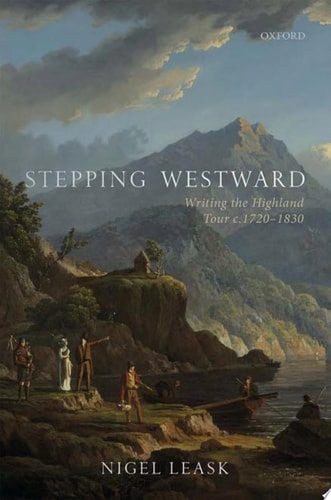
Stepping Westward: Writing the Highland Tour c. 1720-1830
0
0
As an Amazon Associate and affiliate partner, Menrva Books earns from qualifying purchases. Learn more
Author Description
Stepping Westward is the first book dedicated to the literature of the Scottish Highland tour of 1720-1830, a major cultural phenomenon that attracted writers and artists like Pennant, Johnson and Boswell, William and Dorothy Wordsworth, Coleridge, Scott, Hogg, Keats, Daniell, and Turner, as well as numerous less celebrated travellers and tourists. Addressing more than a century's worth of literary and visual representations of the Highlands, the book casts new light on how the tour developed a modern literature of place, acting as a catalyst for thinking about improvement, landscape, and the shaping of British, Scottish, and Gaelic identities.It pays attention to the relationship between travellers and the native Gaels, whose world was plunged into crisis by rapid and forced social change. At the book's core lie the best-selling tours of Pennant and Dr Johnson, associated with attempts to 'improve' the intractable Gaidhealtachd in the wake of Culloden. Alongside the Ossian craze and Gilpin's picturesque, their books stimulated a wave of 'home tours' from the 1770s through the romantic period, including writing by women like Sarah Murray and Dorothy Wordsworth. The incidence of published Highland Tours (many lavishly illustrated), peaked around 1800, but as the genre reached exhaustion, the 'romantic Highlands' were reinvented in Scott's poems and novels, coinciding with steam boats and mass tourism, but also rack-renting, sheep clearance, and emigration.
Menrva's Summary
THE THESIS
This work investigates how the Scottish Highland tour between 1720 and 1830 functioned as a primary catalyst for the development of modern literature of place and the construction of British and Gaelic identities. Nigel Leask, a professor of English literature, utilizes a vast archive of travelogues, visual art, and historical records to examine the intersection of tourism, landscape aesthetics, and the socio-political upheaval of the Gaidhealtachd. The book argues that these travel narratives were not merely descriptive but were active agents in the discourse of 'improvement' and the cultural response to the post-Culloden crisis.
THE SCOPE MAP
What You Will Find
- Analysis of major travelogues by figures such as Pennant, Johnson, Boswell, and the Wordsworths.
- Examination of the 'picturesque' movement and the Ossian craze as drivers of Highland tourism.
- Historical context regarding the impact of the Jacobite defeat, sheep clearances, and forced emigration on the Gaelic population.
- Exploration of the transition from early travel writing to the romanticized literary landscapes found in the works of Sir Walter Scott.
THE AUTHORITY PERSPECTIVE
Scholars recognize this text as a definitive study on the intersection of romantic-era literature and the socio-economic transformation of the Scottish Highlands. Readers frequently note the academic density of the prose and the depth of the archival research presented by the author.
Page Count:
368
Publication Date:
2020-05-10
Publisher:
Oxford University Press
ISBN-10:
0198850026
ISBN-13:
9780198850021
History
Travel
Literary Criticism
Criticism history
Scottish literature
Scottish History
English literature
Community Tags
Similar Books