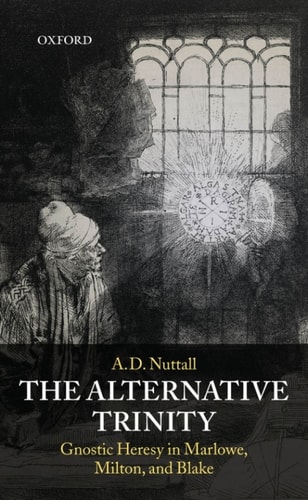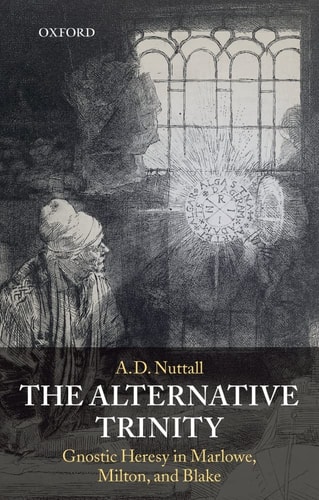
The Alternative Trinity: Gnostic Heresy in Marlowe, Milton, and Blake
0
0
As an Amazon Associate and affiliate partner, Menrva Books earns from qualifying purchases. Learn more
Author Description
The Trinity of orthodox Christianity is harmonious. The Trinity for Blake is, conspicuously, not a happy family: the Father and the Son do not get on. It might be thought that so cumbersome a notion is inconceivable before the rise of Romanticism but the Ophite Gnostics of the second century AD appear to have thought that God the Father was a jealous tyrant because he forbade Adam and Eve to eat from the Tree of Knowledge and that the serpent, who led the way to the Tree of Knowledge, was really Christ. This book explores the possibility of an underground "perennial heresy," linking the Ophites to Blake. The "alternative Trinity" is intermittently visible in Marlowe's Doctor Faustus and even in Milton's Paradise Lost. Blake's notorious detection of a pro-Satan anti-poem, latent in this "theologically patriarchal" epic is less capricious, better grounded historically and philosophically, than is commonly realized.
Menrva's Summary
THE THESIS
This book investigates the historical and philosophical continuity of a 'perennial heresy' that challenges the orthodox Christian Trinity by reinterpreting the roles of the Father, the Son, and the Serpent. A. D. Nuttall, a distinguished scholar of English literature, utilizes historical theology and close textual analysis to argue that Gnostic motifs—specifically those of the second-century Ophites—persist within the works of major English poets. By examining the tension between divine authority and the pursuit of knowledge, Nuttall posits that this alternative theological framework provides a coherent lens through which to view the subversive elements in canonical literature.
THE SCOPE MAP
What You Will Find
- Historical analysis of second-century Ophite Gnosticism and its core tenets regarding the Tree of Knowledge.
- Textual examination of Christopher Marlowe's 'Doctor Faustus' regarding the subversion of divine hierarchy.
- Critical reassessment of John Milton's 'Paradise Lost' through the lens of latent anti-patriarchal theology.
- Philosophical exploration of William Blake's interpretation of the Trinity and his critique of traditional religious structures.
THE AUTHORITY PERSPECTIVE
Scholars and critics frequently cite this work as a sophisticated intervention in the study of literary theology, noting the density of Nuttall's interdisciplinary approach. It is widely regarded as a foundational text for those examining the intersection of Gnostic thought and the English poetic tradition.
Page Count:
296
Publication Date:
2007-03-29
Publisher:
Oxford University Press
ISBN-10:
019921316X
ISBN-13:
9780199213160
History
Philosophy
Theology
English literature
Criticism history
In literature
Literary Criticism