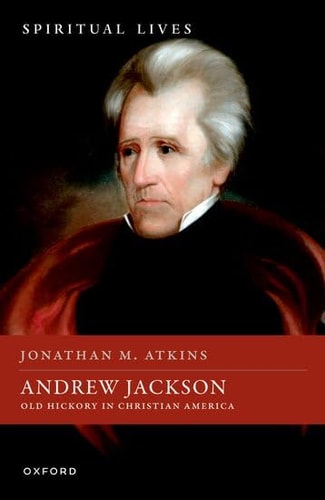
Andrew Jackson: Old Hickory in Christian America
0
0
As an Amazon Associate and affiliate partner, Menrva Books earns from qualifying purchases. Learn more
Author Description
Few today think of Andrew Jackson, the American military hero and president, as a religious man. Nevertheless, Jackson considered himself a Christian throughout his life. Raised a "rigid presbeterian," Jackson's mother wanted her son to grow up to become a clergyman, and despite suffering tragedies and losing his family in the American Revolution, Jackson never rejected the fundamental Christian teachings of his youth. Although he gained notoriety as a rakish young man, religion's influence on him ebbed and flowed as he established himself as part of the South's planter elite.With his devout wife, Rachel, he attended church and knew his Bible and religious subjects well, and while his determination to preserve his reputation involved him in numerous personal conflicts--including a duel that led to his killing a rival--he blended the principles of the antebellum South's honor-based culture with his belief in a traditional, orthodox version of Christianity. Likewise, he easily reconciled his religion with his ownership of slaves and his advocacy of Native American removal, and while he equated his enemies with the forces of evil, he always attributed his military and political accomplishments to the blessings of Providence. As he aged, Jackson became more devout, but he never experienced a dramatic conversion--contradicting the expectations of the leading revivalists of his era's Second Great Awakening--and he consistently promoted religious liberty and separation of church and state as core republican principles. Ultimately, Jackson's faith reflected a version of Christianity widespread in his era, and his frequent appeals for divine guidance and for God's blessing on his nation further encouraged the development of an American civil religion.
Menrva's Summary
THE THESIS
This work investigates the complex intersection of Andrew Jackson's personal religious convictions and his public role as a military leader and president within the context of nineteenth-century American Christianity. Jonathan M. Atkins, a historian specializing in the antebellum era, utilizes primary sources and biographical records to challenge the common perception of Jackson as a secular figure. The book argues that Jackson maintained a consistent, if unconventional, orthodox faith that he successfully reconciled with his political actions, slave ownership, and the honor-based culture of the South. By examining these tensions, the author provides a framework for understanding how Jackson contributed to the formation of American civil religion.
THE SCOPE MAP
What You Will Find
- An analysis of Jackson's upbringing in the Presbyterian tradition and its long-term influence on his moral framework.
- A study of the reconciliation between Jackson's religious beliefs and his participation in dueling, slave ownership, and Native American removal policies.
- Historical evidence drawn from Jackson's personal correspondence, public speeches, and the religious climate of the Second Great Awakening.
- An exploration of Jackson's commitment to the separation of church and state as a fundamental republican principle.
THE AUTHORITY PERSPECTIVE
Historians and scholars of American religion view this text as a nuanced contribution to the study of presidential faith and the cultural history of the early republic. Readers frequently note the author's ability to balance Jackson's personal piety with his controversial political decisions without resorting to moralizing or oversimplification.
Page Count:
240
Publication Date:
2025-05-06
Publisher:
Oxford University Press
ISBN-10:
0198852355
ISBN-13:
9780198852353
Biography
History
Religion
Christian Living
Presidents
Political History
Leaders & Notable People
American History
Community Tags
Similar Books