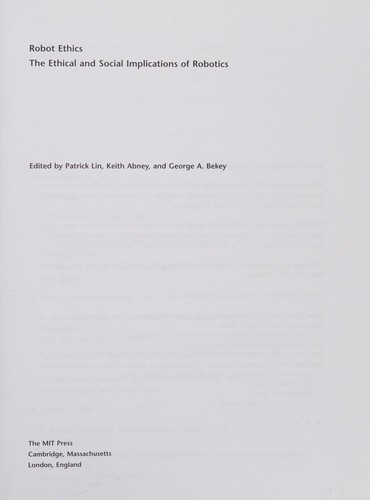
Robot Ethics
0
0
As an Amazon Associate and affiliate partner, Menrva Books earns from qualifying purchases. Learn more
Author Description
Robots today serve in many roles, from entertainer to educator to executioner. As robotics technology advances, ethical concerns become more pressing: Should robots be programmed to follow a code of ethics, if this is even possible? Are there risks in forming emotional bonds with robots? How might society--and ethics--change with robotics? This volume is the first book to bring together prominent scholars and experts from both science and the humanities to explore these and other questions in this emerging field. Starting with an overview of the issues and relevant ethical theories, the topics flow naturally from the possibility of programming robot ethics to the ethical use of military robots in war to legal and policy questions, including liability and privacy concerns. The contributors then turn to human-robot emotional relationships, examining the ethical implications of robots as sexual partners, caregivers, and servants. Finally, they explore the possibility that robots, whether biological-computational hybrids or pure machines, should be given rights or moral consideration. Ethics is often slow to catch up with technological developments. This authoritative and accessible volume fills a gap in both scholarly literature and policy discussion, offering an impressive collection of expert analyses of the most crucial topics in this increasingly important field.
Menrva's Summary
THE THESIS
This volume addresses the complex ethical considerations arising from the rapid advancement of robotics. The book explores whether robots can and should be programmed with ethical codes, the societal impact of forming emotional bonds with robots, and the potential changes to ethics itself as robotics evolve. It brings together experts from science and humanities to examine issues ranging from military applications and legal liabilities to the implications of robots as companions and caregivers, and ultimately, the question of robot rights.
THE SCOPE MAP
- Overview of ethical issues and relevant theories in robotics
- The possibility and challenges of programming robot ethics
- Ethical use of military robots and associated legal/policy questions (liability, privacy)
- Ethical implications of human-robot emotional relationships (sexual partners, caregivers, servants)
- Exploration of robot rights and moral consideration for artificial beings
- Contributions from scholars and experts across science and humanities
- Analysis of the gap between technological development and ethical frameworks
THE AUTHORITY PERSPECTIVE
This authoritative and accessible volume is recognized as a foundational text filling a significant gap in both scholarly literature and policy discussions concerning robot ethics. It offers an impressive collection of expert analyses on crucial topics in this emerging field. The contributors provide a comprehensive examination of issues, from programming ethics to the potential for robot rights. The book is noted for its interdisciplinary approach, bridging science and humanities perspectives to address the most pressing questions.
Page Count:
386
Publication Date:
2012-01-01
ISBN-10:
0262016664
ISBN-13:
9780262016667
Non-Fiction
Science & Technology
Philosophy
Robotics
Ethics
Community Tags
Similar Books