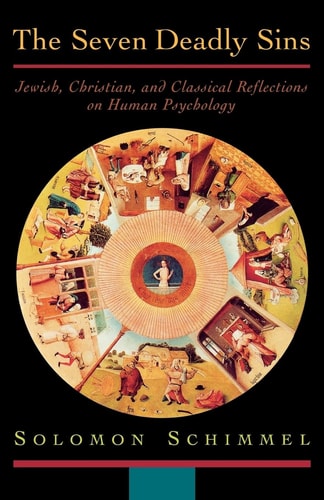
The Seven Deadly Sins: Jewish, Christian, and Classical Reflections on Human Psychology
0
0
As an Amazon Associate and affiliate partner, Menrva Books earns from qualifying purchases. Learn more
Author Description
Most people think of sin as an outmoded idea - part of an obsolete, "medieval" frame of reference. But Solomon Schimmel maintains that "the seven deadly sins" are alive and well and deadlier than ever. Greed, envy, lust, pride, anger, sloth, and gluttony are a permanent part of human nature, and they cause as much unhappiness - both psychological and social - today as at any time in history. Yet the waning of the great religious traditions in the modern world has left us with nothing but secular psychology to guide us in the perennial struggle with our flawed and "fallen" nature. And psychology appears to be inadequate to this task. What else but this inadequacy of contemporary psychology can explain the proliferation in American culture of self-help groups like Alcoholics Anonymous, Smokers Anonymous, Gamblers Anonymous, and Shoppers Anonymous, and the growing range of 12-step programs and other support organizations concerned to help us rein in our uncontrollable appetites? A large array of even more bizarre personal therapies associated with the New Age movement address themselves to spiritual needs which modern man has lost the capacity to satisfy or even understand. Thus people swim with dolphins in order to heal their sense of alienation, or resort to shamanistic rituals and witchcraft to restore their lost community with other human beings. All these problems, Schimmel argues, can be better understood - and therapeutically addressed - within the context of traditional religious and moral teachings about sin (or vice) and virtue. While the great traditions differ with respect to their conception of human origin and destiny, all agree that we can realize happiness only by exercising self-control, or virtue. We must be good in order to be happy. These great traditions are a long-neglected mine of psychological wisdom and practical advice, which Schimmel judiciously culls in an attempt to enhance our diminished understanding of our inner moral lives.
Menrva's Summary
THE THESIS
Can the ancient framework of the seven deadly sins provide a more effective psychological and moral guide for modern life than contemporary secular psychology? Solomon Schimmel, a professor of Jewish education and psychology, examines the limitations of modern therapeutic approaches in addressing human behavioral flaws. By integrating insights from Jewish, Christian, and classical traditions, he argues that traditional moral teachings offer a more robust structure for understanding and managing human appetites than current secular models.
THE SCOPE MAP
What You Will Find
- A comparative analysis of greed, envy, lust, pride, anger, sloth, and gluttony across religious and classical texts.
- A critique of modern self-help movements and 12-step programs as responses to moral and spiritual voids.
- Historical and theological perspectives on the relationship between virtue, self-control, and personal happiness.
- A synthesis of ancient wisdom applied to contemporary psychological struggles and the search for meaning.
THE AUTHORITY PERSPECTIVE
Scholars and readers frequently note the book's success in bridging the gap between theological tradition and modern psychological discourse. Experts highlight this work as a valuable resource for those interested in the intersection of ethics, history, and behavioral health.
Page Count:
320
Publication Date:
1997-10-30
Publisher:
Oxford University Press
ISBN-10:
0195119452
ISBN-13:
9780195119459
Psychology
Religion
Philosophy
Sin
Self Help
Ethics
Deadly Sins
Community Tags
Similar Books