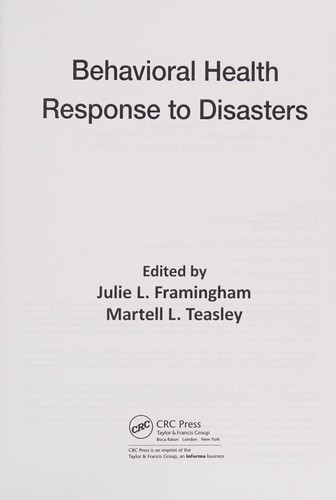
Behavioral Health Response to Disasters
0
0
As an Amazon Associate and affiliate partner, Menrva Books earns from qualifying purchases. Learn more
Author Description
Foreword Behavioral Health Response to Disasters Disaster behavioral health has come a long way in a short amount of time. The book you hold in your hands (or perhaps view on your Kindle e-reader) encompasses an array of topics almost unimaginable even 25 years ago. It covers the roles and responsibilities of government and nongovernmental organizations and the integration of behavioral health into public health preparedness and response. There are separate chapters on children, adolescents, older adults, and racially and ethnically diverse populations. Other chapters address secondary trauma in disaster workers and assessing local disaster vulnerability. The list goes on, including dealing with school systems, long-term care, behavioral health in shelters, treatment for disaster survivors, disaster substance abuse services, culturally competent case management, response team training, and building community resilience. A simple perusal of the table of contents serves as an illustration of the way that attention to disaster behavioral health has grown exponentially in research, policy, and practice communities. It was not always so. When I began graduate training in the mid 1980s, to my knowledge disaster mental health was not part of any graduate school curriculum. A small subset of clinical psychologists and other mental health professionals had some training in crisis mental health, but it was optional, and it carried a different and much more specifi c meaning. Crisis mental health in those days typically meant: (1) working with people who were in acute crisis, (2) working with victims of extreme circumstances using models derived from the military and trauma research, and/or (3) community crisis intervention
Menrva's Summary
THE THESIS
This book addresses the evolving field of disaster behavioral health, detailing the integration of mental health services into public health preparedness and response. The text covers the roles of governmental and non-governmental organizations, with dedicated chapters on specific populations including children, adolescents, older adults, and diverse ethnic groups. It also explores crucial aspects such as secondary trauma in disaster workers, local vulnerability assessment, and the application of behavioral health principles in various settings like school systems, long-term care facilities, and shelters. The book further examines treatment for survivors, substance abuse services, culturally competent case management, response team training, and strategies for building community resilience, reflecting the exponential growth in research, policy, and practice within this domain.
THE SCOPE MAP
- Roles and responsibilities of government and non-governmental organizations in disaster behavioral health.
- Integration of behavioral health into public health preparedness and response.
- Specific considerations for children, adolescents, older adults, and racially/ethnically diverse populations.
- Addressing secondary trauma in disaster workers.
- Assessing local disaster vulnerability.
- Behavioral health in school systems, long-term care, and shelters.
- Treatment approaches for disaster survivors.
- Disaster substance abuse services and culturally competent case management.
- Response team training and building community resilience.
THE AUTHORITY PERSPECTIVE
The book is presented as a comprehensive overview of the advancements in disaster behavioral health over the past 25 years, reflecting significant growth in research, policy, and practice. The foreword highlights the extensive range of topics covered, from organizational roles to specific population needs and practical applications in various settings. The detailed table of contents suggests a thorough exploration of the field, indicating its utility for professionals and researchers alike. The text aims to consolidate knowledge and practice in a rapidly developing area of public health and mental health.
Page Count:
409
Publication Date:
2012-01-01
ISBN-10:
1439821232
ISBN-13:
9781439821237
Science
Non-Fiction
Health
Psychology
Social Science
Community Tags
Similar Books