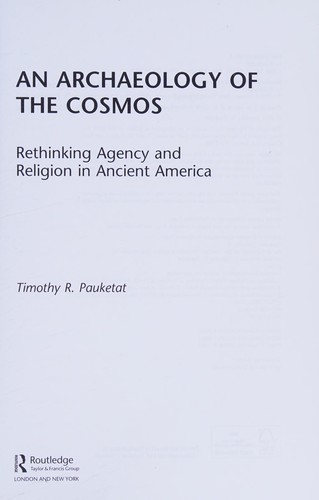
An Archaeology of the Cosmos
0
0
As an Amazon Associate and affiliate partner, Menrva Books earns from qualifying purchases. Learn more
Author Description
An Archaeology of the Cosmos seeks answers to two fundamental questions of humanity and human history. The first question concerns that which some use as a defining element of humanity: religious beliefs. Why do so many people believe in supreme beings and holy spirits? The second question concerns changes in those beliefs. What causes beliefs to change? Using archaeological evidence gathered from ancient America, especially case material from the Great Plains and the pre-Columbian American Indian city of Cahokia, Timothy Pauketat explores the logical consequences of these two fundamental questions. Religious beliefs are not more resilient than other aspects of culture and society, and people are not the only causes of historical change. An Archaeology of the Cosmos examines the intimate association of agency and religion by studying how relationships between people, places, and things were bundled together and positioned in ways that constituted the fields of human experience. This rethinking theories of agency and religion provides readers with challenging and thought provoking conclusions that will lead them to reassess the way they approach the past.
Menrva's Summary
THE THESIS
This book investigates the origins and transformations of religious beliefs, particularly the human propensity to believe in supreme beings and holy spirits. Timothy R. Pauketat, drawing on archaeological evidence from ancient America, especially the Great Plains and Cahokia, explores how these beliefs are formed and why they change. The work challenges conventional theories by examining the intricate connections between agency and religion, analyzing how human experiences are shaped by the bundling and positioning of relationships between people, places, and things. Pauketat's conclusions prompt a reevaluation of how we understand the past and the forces that drive historical change.
THE SCOPE MAP
- Analysis of religious beliefs and their role in human history.
- Case studies from ancient America, including the Great Plains and Cahokia.
- Exploration of the causes behind changes in religious beliefs.
- Examination of the association between agency and religion.
- Study of how relationships between people, places, and things constitute human experience.
- Rethinking of theories concerning agency and religion.
- Archaeological evidence as the primary source of investigation.
THE AUTHORITY PERSPECTIVE
The book is presented as a scholarly work that challenges existing theories on agency and religion, offering thought-provoking conclusions for readers interested in reassessing the past. Its focus on archaeological evidence from ancient America, particularly Cahokia, suggests a deep dive into material culture to understand belief systems. The publisher's description indicates that the work aims to provide a new perspective on the resilience of religious beliefs and the drivers of historical change. This approach positions the book as a significant contribution to the fields of archaeology, history, and religious studies.
Page Count:
230
Publication Date:
2012-01-01
ISBN-10:
0415521289
ISBN-13:
9780415521284
Religion
Non-Fiction
History
American History
Anthropology
Archaeology
Community Tags
Similar Books