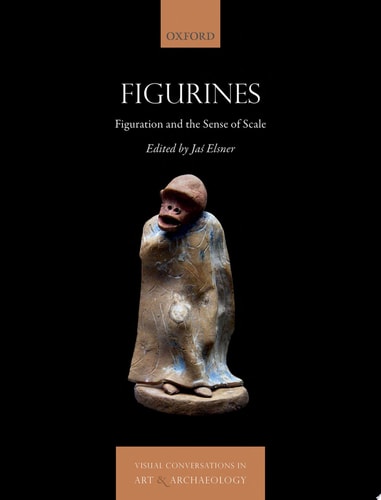
Figurines: Figuration and The Sense of Scale
0
0
As an Amazon Associate and affiliate partner, Menrva Books earns from qualifying purchases. Learn more
Author Description
Figurines are objects of handling. As touchable objects, they engage the viewer in different ways from flat art, whether relief sculpture or painting. Unlike the voyeuristic relationship of viewing a neatly framed pictorial narrative as if from the outside, the viewer as handler is always potentially and without protection within the narrative of figurines. As such, they have potential for a potent, even animated, agency in relation to those who use them.This volume concerns figurines as archaeologically-attested materials from literate cultures with surviving documents that have no direct links of contiguity, appropriation, or influence in relation to each other. It is an attempt to put the category of the figurine on the table as a key conceptual and material problematic in the art history of antiquity. It does so through comparative juxtaposition of close-focused chapters drawn from deep art-historical engagement with specific ancient cultures - Chinese, pre-Columbian Mesoamerican, and Greco-Roman. It encourages comparative conversation across the disciplines that constitute the art history of the ancient world through finding categories and models of discourse that may offer fertile ground for comparison and antithesis. It extends the rich and astute literature on prehistoric figurines into understanding the figurine in historical contexts, where literary texts and documents, inscriptions, or surviving terminologies can be adduced alongside material culture. At stake are issues of figuration and anthropomorphism, miniaturization and portability, one-off production and replication, and substitution and scale at the interface of archaeology and art history.
Menrva's Summary
THE THESIS
This volume investigates the figurine as a distinct category of material culture, questioning how the physical scale and tactile nature of these objects influence their agency and meaning within ancient societies. Jaś Elsner, a scholar of art history and classical antiquity, utilizes a comparative framework to analyze figurines from diverse, non-contiguous cultures. By integrating archaeological evidence with literary and epigraphic sources, the author argues that figurines function as unique interfaces between the human viewer and the represented subject, necessitating a new conceptual approach to their study in art history.
THE SCOPE MAP
What You Will Find
- Comparative analysis of figurines from Chinese, pre-Columbian Mesoamerican, and Greco-Roman cultures.
- Theoretical frameworks for understanding anthropomorphism, miniaturization, and portability in ancient art.
- Methodological approaches for integrating material culture with surviving literary texts and inscriptions.
- Exploration of the tactile relationship between the viewer and the object compared to traditional flat art.
THE AUTHORITY PERSPECTIVE
Experts recognize this work as a significant contribution to the comparative study of ancient material culture, particularly for its attempt to bridge the gap between archaeology and art history. Readers frequently note the academic density of the prose and the author's rigorous application of cross-cultural analysis to the study of small-scale sculpture.
Page Count:
208
Publication Date:
2020-12-22
Publisher:
Oxford University Press
ISBN-10:
0198861095
ISBN-13:
9780198861096
Anthropology
Ancient History
Art History
Archaeology
Community Tags
Similar Books