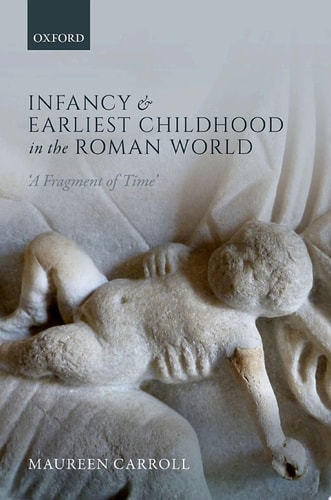
Infancy and Earliest Childhood in the Roman World: A Fragment of Time
0
0
As an Amazon Associate and affiliate partner, Menrva Books earns from qualifying purchases. Learn more
Author Description
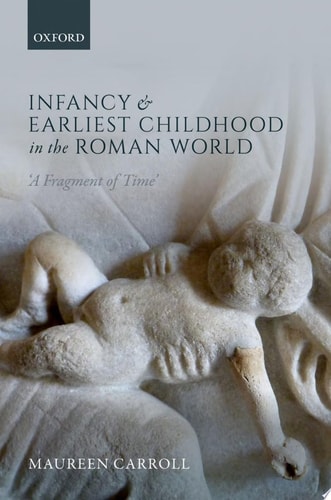
Despite the developing emphasis in current scholarship on children in Roman culture, there has been relatively little research to date on the role and significance of the youngest children within the family and in society. This volume singles out this youngest age group, the under one-year-olds, in the first comprehensive study of infancy and earliest childhood to encompass the Roman Empire as a whole: integrating social and cultural history with archaeological evidence, funerary remains, material culture, and the iconography of infancy, it explores how the very particular historical circumstances into which Roman children were born affected their lives as well as prevailing attitudes towards them. Examination of these varied strands of evidence, drawn from throughout the Roman world from the fourth century BC to the third century AD, allows the rhetoric about earliest childhood in Roman texts to be more broadly contextualized and reveals the socio-cultural developments that took place in parent-child relationships over this period. Presenting a fresh perspective on archaeological and historical debates, the volume refutes the notion that high infant mortality conditioned Roman parents not to engage in the early life of their children or to view them, or their deaths, with indifference, and concludes that even within the first weeks and months of life Roman children were invested with social and gendered identities and were perceived as having both personhood and value within society.
Menrva's Summary
THE THESIS
This volume investigates the social and cultural status of infants under one year old within the Roman Empire, challenging the assumption that high mortality rates led to parental indifference. Author Maureen Carroll, a specialist in Roman archaeology and social history, synthesizes diverse evidence to argue that infants were recognized as individuals with distinct social and gendered identities. By integrating funerary remains, material culture, and iconography, the work provides a framework for understanding the value placed on the youngest members of Roman society from the fourth century BC to the third century AD.
THE SCOPE MAP
What You Will Find
- Analysis of funerary remains and burial practices for infants.
- Examination of Roman iconography and material culture related to childhood.
- Integration of textual rhetoric with archaeological findings.
- Socio-cultural analysis of parent-child relationships across the Roman Empire.
Scope Limits
- The study is restricted to the period between the fourth century BC and the third century AD.
- The focus is specifically on infants under one year of age rather than older children.
THE AUTHORITY PERSPECTIVE
Scholars recognize this work as a significant contribution to the field of Roman childhood studies, particularly for its interdisciplinary approach to often-overlooked archaeological data. Experts frequently highlight the text as a necessary corrective to previous historical assumptions regarding Roman parental attitudes toward infant mortality.
Page Count:
336
Publication Date:
2018-01-01
Publisher:
OUP Oxford
ISBN-10:
0192524348
ISBN-13:
9780192524348
History
Childhood Studies
Cultural History
Ancient - Rome
Archaeology
Social History
Ancient History
Community Tags
Similar Books