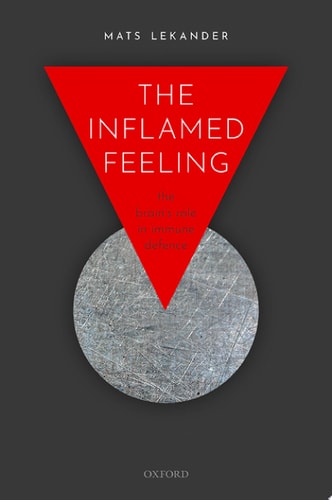
The Inflamed Feeling: The Brain's Role in Immune Defence
0
0
As an Amazon Associate and affiliate partner, Menrva Books earns from qualifying purchases. Learn more
Author Description
What do feeling sick and being afraid of strangers have in common?The answer is that these feelings represent a behavioural drive which evolved in our ancestors to combat the most dangerous threat to survival: infection.Behaviour and emotions play pivotal roles in the struggle for good health. When your body is telling your brain that you are sick, you are experiencing survival strategies that developed years ago. Listening to these feelings will allow you to save energy that can be used for recuperation and recovery. Urges of staying still, noticing pain, feeling sorry for yourself, and focusing inward are bodily messages that benefit immune defence.For our forefathers, in whom these strategies evolved, it wasn't enough to change behaviour once sick. Defensive behaviours to be able to avoid infection in the first place were also needed. Thus, tools for detecting illness in others evolved. This is why superficial signs of ill-health, or maybe even the prejudicial idea of a person with a foreign bacterial culture, can cause anxiety and avoidance. Not surprisingly, having a too high or too low sensitivity to inner or outer disease signals is connected to mental as well as somatic disorders.In this book, Mats Lekander explains the science behind perceived health, using Barbie dolls, visual illusions, personal experiences, placebo, hypochondriacs and historical anecdotes. Placed against a back-drop of the latest neuroscience and psychoneuroimmunology he explains why you feel healthy or sick. He describes when he poisoned himself at work and enjoyed it, and why white blood cells and inflammation are key players when our brains trys to guess what is going in our inner worlds.The result is an absorbing and eye-opening book, one that seems so relevant in the current times.
Menrva's Summary
THE THESIS
This book investigates the evolutionary connection between the brain's perception of health and the body's immune defense mechanisms. Mats Lekander, a researcher in psychoneuroimmunology, utilizes a blend of neuroscience, historical anecdotes, and personal case studies to argue that feelings of sickness and social avoidance are adaptive survival strategies. He posits that our internal states and external perceptions are calibrated by the immune system to prioritize recovery and prevent infection.
THE SCOPE MAP
What You Will Find
- Analysis of psychoneuroimmunology and the brain-immune system feedback loop
- Examination of evolutionary survival strategies like social avoidance and energy conservation
- Case studies and personal anecdotes including self-experimentation and historical health observations
- Discussion on the link between disease signal sensitivity and mental or somatic disorders
THE AUTHORITY PERSPECTIVE
Experts and readers recognize this work as an accessible entry point into the complex field of psychoneuroimmunology. The text is noted for its ability to synthesize dense scientific research with relatable examples and clear, engaging prose.
Page Count:
264
Publication Date:
2022-04-25
Publisher:
Oxford University Press
ISBN-10:
0198863446
ISBN-13:
9780198863441
Health
Science
Psychology
Neuroscience
Evolutionary Biology
Physiology
Mind & Body
Immunology
Community Tags
Similar Books