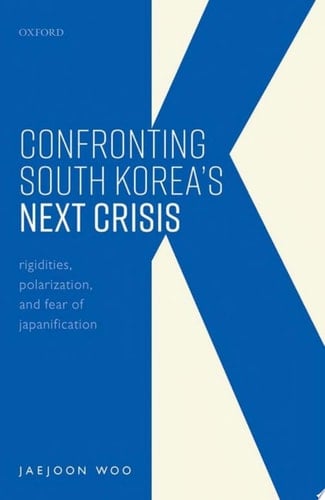
Confronting South Korea's Next Crisis: Rigidities, Polarization, and Fear of Japanification
0
0
Author Description
South Korea's economic miracle is a well-known story. However, today Korea is confronting a new set of internal and external risks, which may foreshadow the next crisis. The Korean economy has been struggling with the faltering growth momentum and the rise of unprecedented socio-economic problems over recent years well before the pandemic crisis. After abrupt downshifts to markedly slower growth in the early 2000s, economic growth has continued to decelerate. Koreans are grappling with slow income growth, all time-high household debt, high youth unemployment, inequality, and social polarization. Politics is in disarray and is incapable of directing social discourse for the common good. Rapid population aging along with the world's lowest fertility rates stokes fears of Japanification. Simultaneously, disruptive technologies and fast-changing business environment such as the rise of China clash with a range of long-standing structural problems. The contemporary challenges are radically different from those seen in the early stages of industrialization. There are multiple risks that threaten to self-perpetuate low or stagnant growth over the next decade or so, if not an outright financial crisis.Motivated by these latest developments, this book seeks to provide a timely and in-depth analysis of key current issues and foreseeable challenges of the economy, with a provocative reassessment of its future. Based on extensive new empirical works, it examines the underlying causes of the socio-economic problems. In a constructive spirit, it puts in perspective what would constitute critical elements of ideal policy solutions and the direction of the future government's role.
Menrva's Summary
THE THESIS
This book investigates whether South Korea’s current socio-economic rigidities and demographic shifts will lead to long-term stagnation or a full-scale financial crisis. Jaejoon Woo, an economist with extensive experience in macroeconomic analysis, utilizes recent empirical data to dissect the structural barriers hindering Korea's growth. He argues that the nation's transition from rapid industrialization to a mature economy is being obstructed by political polarization, household debt, and a rapidly aging population. The work provides a framework for understanding these interconnected risks and proposes necessary shifts in government policy to avoid a 'Japanification' of the Korean economy.
THE SCOPE MAP
What You Will Find
- Analysis of macroeconomic growth deceleration since the early 2000s.
- Examination of demographic trends including fertility rates and population aging.
- Assessment of the impact of household debt and youth unemployment on social stability.
- Evaluation of the role of disruptive technologies and regional competition with China.
- Proposed policy solutions for structural reform and governance improvement.
THE AUTHORITY PERSPECTIVE
Experts view this text as a rigorous examination of the structural vulnerabilities currently facing the South Korean economy. Readers frequently note the academic density of the prose, which provides a comprehensive look at the intersection of political dysfunction and economic stagnation.
Page Count:
656
Publication Date:
2022-10-31
Publisher:
Oxford University Press
ISBN-10:
0198864426
ISBN-13:
9780198864424
Economics
Sociology
Finance
Economic History
South Korea
Public Policy
Community Tags
Similar Books