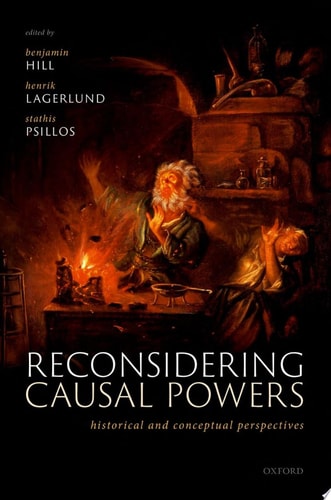
Reconsidering Causal Powers: Historical and Conceptual Perspectives
0
0
Author Description
Causal powers are returning to the forefront of realist philosophy of science. Once central features of philosophical thinking about the natures of substances and causes, they were banished during the early modern era and the Scientific Revolution. In this volume, distinguished scholars revisit the fortunes of causal powers as scientific explanatory principles within the theories of substance and cause across history. Each chapter focuses on the philosophical roles causal powers were thought to play at the time, and the reasons offered in support, or against, their coherence and ability to perform these roles. By placing rigorous philosophical analyses of thinking about causal powers within their historical contexts, features of their natures which might remain hidden to contemporary practitioners can be more readily identified and more carefully analyzed. The thoughts of such prominent philosophers as Aristotle, Scotus, Ockham, and Buridan are explored, then on through Suarez, Descartes, and Malebranche, to Locke and Hume, and ultimately to contemporary figures like the logical positivists Goodman and Lewis.
Menrva's Summary
THE THESIS
This volume investigates the historical trajectory and conceptual validity of causal powers as explanatory principles within the philosophy of science. The editors, Benjamin Hill, Henrik Lagerlund, and Stathis Psillos, assemble a collection of scholarly essays that trace the rise, decline, and resurgence of causal powers from antiquity through the modern era. By situating these concepts within their specific historical contexts, the authors argue that understanding past philosophical debates is essential for contemporary realist approaches to causality.
THE SCOPE MAP
What You Will Find
- Historical analysis of causal power theories from Aristotle to the logical positivists.
- Critical examinations of the works of Scotus, Ockham, Buridan, Suarez, Descartes, Malebranche, Locke, and Hume.
- Comparative studies on the coherence and explanatory utility of causal powers across different scientific paradigms.
- Philosophical frameworks for evaluating the role of substances and causes in realist science.
THE AUTHORITY PERSPECTIVE
Experts identify this collection as a rigorous resource for scholars interested in the intersection of metaphysics and the history of science. Readers frequently note the academic density of the prose, which assumes a high level of familiarity with the history of philosophical thought.
Page Count:
320
Publication Date:
2021-03-07
Publisher:
Oxford University Press
ISBN-10:
0198869525
ISBN-13:
9780198869528
Philosophy
Science
Metaphysics
Causation
Epistemology
Community Tags
Similar Books