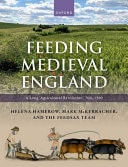
Feeding Medieval England
0
0
As an Amazon Associate and affiliate partner, Menrva Books earns from qualifying purchases. Learn more
Author Description
As In The Rest Of Europe, The Population Of Medieval England Grew Steeply, Especially Between The Tenth And Thirteenth Centuries. This Volume Investigates How Medieval Farmers Managed To Produce Sufficiently Large Harvests To Sustain This Growth-which In Turn Fuelled A Major Expansion Of Towns And Markets-and The Impact Of This 'cerealisation' On The Landscape. It Presents New Evidence Recovered From Hundreds Of Archaeological Excavations For The Development Of The Medieval Farming Regimes That Shaped The English Landscape In Ways Still Visible Today. Medieval Farming Is A Contentious Topic, Not Least Because Of The Different Approaches Taken By Historians, Archaeologists And Geographers. No Consensus Has Been Reached About The Cultivation Regimes That Underpinned The Remarkable Increase In Cereal Production Seen In This Period. A Large-scale Analysis Of The Excavated Remains Of Medieval Crops, Weeds, Livestock And Pollen, Has Generated New Evidence Using A Range Of Science-based Methods. The Results Reveal The Conditions In Which Medieval Crops Were Grown And The Way In Which Land Use Changed Between The Late Roman Period And The Black Death. The Authors Relate The Results To Archaeological And Written Evidence For Farms And Farming, Bringing An Ecological Perspective To The Debate About The So-called Medieval 'agricultural Revolution'. The 'cerealisation' Of England Emerges As A Regionally Variegated Process Lasting Several Centuries, Whose Overall Impact Can Nevertheless Be Described As 'revolutionary'.
Menrva's Summary
THE THESIS
This volume investigates how medieval farmers in England managed to produce sufficient harvests to sustain rapid population growth and urban expansion between the tenth and thirteenth centuries. The authors, a multidisciplinary team of archaeologists and scientists, utilize a vast dataset derived from hundreds of excavations to challenge existing debates regarding the so-called medieval agricultural revolution. By integrating bioarchaeological evidence with historical records, the text provides a rigorous framework for understanding the ecological and economic shifts that defined the period.
THE SCOPE MAP
What You Will Find
- Large-scale analysis of excavated crop remains, weed assemblages, livestock bones, and pollen data.
- Comparative study of land use patterns from the late Roman period through the onset of the Black Death.
- Integration of science-based methodologies with traditional historical and archaeological documentation.
- Regional analysis of the 'cerealisation' process and its long-term impact on the English landscape.
THE AUTHORITY PERSPECTIVE
Experts recognize this work as a significant contribution to the study of medieval agrarian history due to its reliance on empirical scientific data. Readers frequently note the academic density of the prose, which serves as a foundational resource for scholars and students of historical ecology.
Page Count:
0
Publication Date:
2025-01-01
Publisher:
New York : Oxford University Press,
ISBN-10:
0198878524
ISBN-13:
9780198878520
History
Science
Archaeology
Agriculture
Ecology
Community Tags
Similar Books




Reader Comments
Share Your Thoughts
No comments yet. Be the first to share your thoughts!