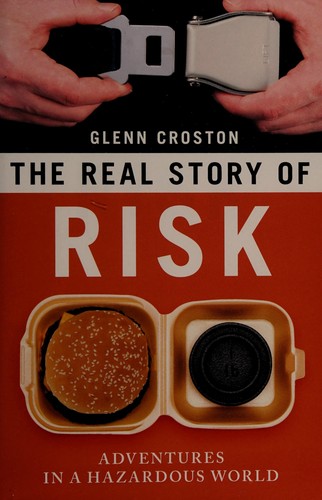
The Real Story of Risk
0
0
As an Amazon Associate and affiliate partner, Menrva Books earns from qualifying purchases. Learn more
Author Description
We live in a world of risk. It waits for us in our refrigerator and surrounds us on the freeway. It's lurking in our arteries and sitting in our 401(k) accounts. Given that we deal with risk on a constant basis, we should be good at it; as it turns out, though, we're not. We're blind to common risks like heart disease (one in five deaths), but we shrink in fear from rare events like shark attacks (one in a million) and airplane crashes (one in twenty thousand). What accounts for our poor ability to perceive and react to the risks that really matter? In The Real Story of Risk, biologist Glenn Croston traces our distorted perception of risk back to our ancient ancestors. Starting from an evolutionary perspective, Croston reminds readers that we are all the culmination of a long line of survivors who fought life-and-death threats such as attacks from wild animals, starvation, and disease. The fact that we have covered Earth with seven billion people is a testament to our skill at overcoming these risks. But our spectacular success has also produced our contemporary artificial world with new threats like climate change, chili dogs, and online gambling. Our brains, which evolved to deal with the ancient world, are ill equipped to process the new threats we face. --Amazon
Menrva's Summary
THE THESIS
Our ancient brains are ill-equipped to navigate the complex risks of the modern world. In The Real Story of Risk, biologist Glenn Croston explores why humans consistently misjudge threats, favoring rare, dramatic dangers over common, everyday ones. He traces this distorted perception back to our evolutionary past, where survival depended on reacting to immediate physical threats like predators and starvation. While this ancient survival instinct made us successful as a species, it leaves us poorly prepared for contemporary risks such as climate change, unhealthy diets, and financial instability, which our brains struggle to process effectively.
THE SCOPE MAP
- An evolutionary perspective on human risk perception, tracing its roots to ancestral survival needs.
- Analysis of cognitive biases that lead to misjudging the probability and severity of risks.
- Examples of common modern risks (e.g., heart disease, financial instability) contrasted with rare, sensationalized risks (e.g., shark attacks, plane crashes).
- Discussion of how our artificial modern environment presents new challenges that our evolved brains are not designed to handle.
- Insights into why we fear unlikely events more than statistically significant dangers.
THE AUTHORITY PERSPECTIVE
The book is framed as an accessible exploration of human psychology and evolutionary biology, aiming to explain our often irrational responses to risk. The author's background as a biologist lends an authoritative voice to the discussion of our innate survival mechanisms. The premise suggests a work that will challenge readers to reconsider their own risk assessments and understand the biological underpinnings of their fears and decisions. It appears designed to inform a general audience about the science behind risk perception.
Page Count:
294
Publication Date:
2012-01-01
ISBN-10:
1616146605
ISBN-13:
9781616146603
Psychology
Science
Non-Fiction
Evolutionary Biology
Decision Making
Community Tags
Similar Books