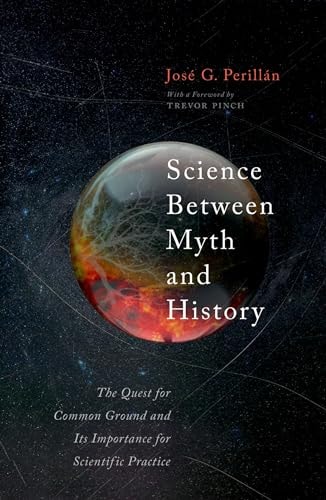
Science Between Myth and History: The Quest for Common Ground and Its Importance for Scientific Purpose
0
0
As an Amazon Associate and affiliate partner, Menrva Books earns from qualifying purchases. Learn more
Author Description
Scientists regularly employ historical narrative as a rhetorical tool in their communication of science, yet there's been little reflection on its effects within scientific communities and beyond. Science Between Myth and History begins to unravel these threads of influence. The stories scientists tell are not just poorly researched scholarly histories, they are myth-histories, a chimeric genre that bridges distinct narrative modes. This study goes beyond polarizing questions about who owns the history of science and establishes a common ground from which to better understand the messy and lasting legacy of the stories scientists tell. It aims to stimulate vigorous conversation among science practitioners, scholars, and communicators. Scientific myth-histories undoubtedly deliver value, coherence, and inspiration to their communities. They are tools used to broker scientific consensus, resolve controversies, and navigate power dynamics. Yet beyond the explicit intent and rationale behind their use, these narratives tend to have great rhetorical power and social agency that bear unintended consequences. Science Between Myth and History unpacks the concept of myth-history and explores four case studies in which scientist storytellers use their narratives to teach, build consensus, and inform the broader public. From geo-politically informed quantum interpretation debates to high-stakes gene-editing patent disputes, these case studies illustrate the implications of storytelling in science. Science Between Myth and History calls on scientists not to eschew writing about their history, but to take more account of the stories they tell and the image of science they project. In this time of eroding common ground, when many find themselves dependent on, yet distrustful of scientific research, this book interrogates the effects of mismatched, dissonant portraits of science.
Menrva's Summary
THE THESIS
This book investigates the rhetorical function and social consequences of the historical narratives, or 'myth-histories,' that scientists employ to frame their work and influence public perception. José G. Perillán, a scholar in the history and philosophy of science, examines how these narratives serve as tools for building consensus and navigating power dynamics within scientific communities. By analyzing the intersection of myth and historical record, the author argues that these stories possess significant social agency that often produces unintended effects on the public understanding of scientific progress.
THE SCOPE MAP
What You Will Find
- An analysis of the 'myth-history' genre as a bridge between scientific communication and historical narrative.
- Four distinct case studies covering topics from quantum interpretation debates to gene-editing patent disputes.
- An examination of how storytelling influences scientific consensus and resolves internal controversies.
- A framework for scientists to evaluate the rhetorical power and social impact of the histories they project.
THE AUTHORITY PERSPECTIVE
Experts identify this work as a critical intervention in the study of scientific communication and the sociology of knowledge. Readers frequently note that the text provides a necessary, nuanced perspective on how historical framing shapes the public's trust in scientific institutions.
Page Count:
368
Publication Date:
2023-01-01
Publisher:
Oxford University Press
ISBN-10:
0198883609
ISBN-13:
9780198883609
Science
Sociology
Communication
Community Tags
Similar Books