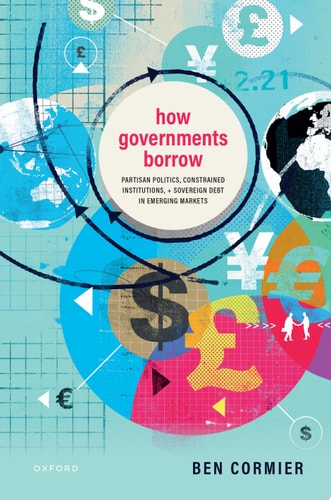
How Governments Borrow: Partisan Politics, Constrained Institutions, and Sovereign Debt in Emerging Markets
0
0
As an Amazon Associate and affiliate partner, Menrva Books earns from qualifying purchases. Learn more
Author Description
Sovereign Debt Composition Enhances Or Limits The Capacity Of An Emerging Market (em) Government To Contribute To Social And Economic Development. Many Ems Depend On Foreign Currency Debt. How Much External Debt An Em Government Owes, The Cost Of That Debt, The Maturity Of That Debt, And The Conditions Attached To That Debt All Determine The Political And Economic Opportunities And Risks Associated With A Government's Borrowings. Ems Borrow From Different Sources Each Year, Leading Them To Build Different Sovereign Debt Structures Over Time. Some Prioritize Cheap Yet Conditional Official Credit, Which Constrains Policy Autonomy But Enhances Debt Sustainability. Others Prioritize Comparatively Expensive Bond Markets, Which Enhances Policy Autonomy But Brings More Expensive Repayment Obligations On To National Balance Sheets. As Countries Accumulate Debt, The Borrowing Choices They Make Come To Have Important Effects On Fiscal Space, Debt Sustainability, And Development. How Governments Borrow Shows How Annual Borrowing Decisions Are Informed By Domestic Politics. The Book Traces The Annual Fiscal Policymaking Process In Ems To Show How A Government's Partisan Policy Preferences Are A Primary Determinant Of Annual External Borrowing Decisions And Thus Patterns Of Debt Accumulation. That Sovereign Debt Composition Has Partisan Political Roots Provides Insights For Scholars In Political Science, International Relations, Economics, Sociology, And Public Administration That Work On Sovereign Debt-- Provided By Publisher.
Menrva's Summary
THE THESIS
This book investigates how domestic partisan politics and institutional constraints dictate the specific borrowing strategies and sovereign debt structures of emerging market governments. Ben Cormier, a scholar in political economy, examines the annual fiscal policymaking processes within emerging markets to argue that debt composition is not merely a product of market necessity but a reflection of a government's ideological preferences. By analyzing the trade-offs between conditional official credit and market-based bond financing, the author demonstrates how political choices directly influence long-term fiscal space and national development trajectories.
THE SCOPE MAP
What You Will Find
- Analysis of sovereign debt composition including foreign currency debt, maturity profiles, and repayment costs.
- A framework for understanding the trade-offs between policy autonomy and debt sustainability.
- Examination of the annual fiscal policymaking process in emerging market economies.
- Evidence linking partisan policy preferences to patterns of national debt accumulation.
THE AUTHORITY PERSPECTIVE
Experts in international political economy identify this work as a significant contribution to the study of sovereign debt, particularly for its focus on the political roots of fiscal policy. Scholars frequently note the clarity with which the author bridges the gap between domestic political incentives and international financial outcomes.
Page Count:
192
Publication Date:
2024-01-01
Publisher:
Oxford University Press
ISBN-10:
0198882734
ISBN-13:
9780198882732
Economics
Politics
Economic Policy & Development
Sovereign Debt
International relations
Specific Topics
Finance
Public Administration
Public Policy
Community Tags
Similar Books