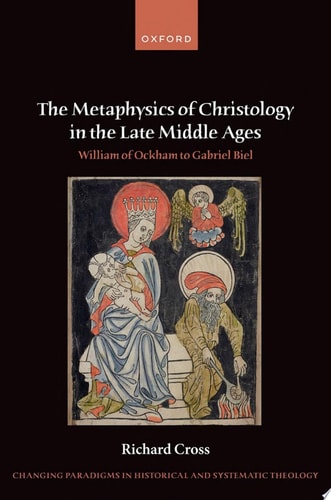
The Metaphysics of Christology in the Late Middle Ages: William of Ockham to Gabriel Biel
0
0
As an Amazon Associate and affiliate partner, Menrva Books earns from qualifying purchases. Learn more
Author Description
The late middle ages was a period of great speculative innovation in Christology, within the framework of a standard Christological opinion established by the Franciscan John Duns Scotus and the Dominican Hervaeus Natalis. According to this view, the Incarnation consists in some kind of dependence relationship between an individual human nature and a divine person. The Metaphysics of Christology in the Late Middle Ages: William of Ockham to Gabriel Biel explores ways in which this standard opinion was developed in the late middle ages. Theologians offered various proposals about the nature of the relationship--as a categorial relation, or an absolute quality, or even just the divine will.Author Richard Cross also considers alternative positions: Peter Auriol's claim that the divine person is a 'quidditative termination' of the human nature; the homo assumptus theology of John Wyclif and Jan Hus; and the retrieval of a truly Thomistic Christology in the fifteenth century in the thought of John Capreolus and Denys the Carthusian. The fourteenth and fifteenth centuries were pre-eminently the age of nominalism, and this book examines the impact of nominalism on Christological discussions, as well as the development of Thomist and Scotist theology in the period. It also provides essential background for the correct understanding of Reformation Christology.
Menrva's Summary
THE THESIS
This work investigates the evolution of Christological metaphysics during the late Middle Ages, specifically focusing on how theologians navigated the relationship between human nature and the divine person. Professor Richard Cross utilizes his expertise in historical theology to analyze the shift from the established frameworks of John Duns Scotus and Hervaeus Natalis toward the nominalist and Thomist developments of the fourteenth and fifteenth centuries. By examining the diverse proposals regarding the Incarnation, the text clarifies the intellectual climate that preceded and influenced Reformation-era theological discourse.
THE SCOPE MAP
What You Will Find
- Analysis of the Christological theories of William of Ockham, Gabriel Biel, Peter Auriol, John Wyclif, and Jan Hus.
- Examination of the impact of nominalism on late medieval theological speculation.
- Comparative study of the retrieval of Thomist Christology by figures such as John Capreolus and Denys the Carthusian.
- Historical context regarding the development of the 'homo assumptus' theology and its significance for later Reformation thought.
THE AUTHORITY PERSPECTIVE
Scholars recognize this text as a rigorous, specialized examination of late medieval scholasticism that provides necessary clarity on complex metaphysical debates. Readers frequently note the academic density of the prose, which serves as a foundational resource for advanced students of historical and systematic theology.
Page Count:
352
Publication Date:
2023-01-01
Publisher:
Oxford University Press
ISBN-10:
0198880642
ISBN-13:
9780198880646
History
Philosophy
Religion
Theology
Church History
Christianity
Jesus Christ
Community Tags
Similar Books