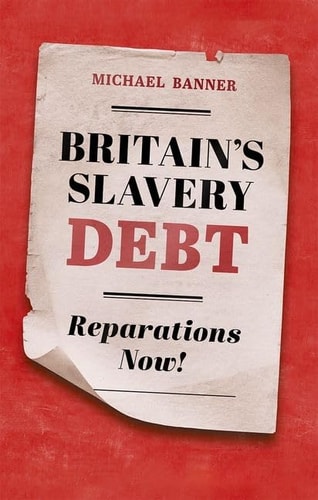
Britain's Slavery Debt: Reparations Now!
0
0
As an Amazon Associate and affiliate partner, Menrva Books earns from qualifying purchases. Learn more
Author Description
A concise, reasoned, practical case for why Britain should pay reparations for historic wrongs to present Caribbean inhabitants.Britain owes reparations to the Caribbean. The exploitation of generations of those trafficked from Africa, or born into enslavement, to work the immensely profitable sugars plantations, enriched both British individuals and the British nation. Colonialism, even after emancipation, perpetuated the exploitation. The Caribbean still suffers, and Britain still benefits, from these historic wrongs.There are some fairly standard objections to reparations -- 'slavery ended a long time ago'; 'Britain should be celebrating its role in abolishing slavery'; 'slavery was legal back then and we shouldn't judge the past by the standards of the present'; 'you shouldn't visit the sins of the fathers on the sons'; and so on. And there is a sense that the practical problems of who should pay what to whom are immensely difficult.Michael Banner carefully considers and answers these objections. He argues that reparations are not about punishment, but about the restoration of wrongful gains. In Reparations Now! he makes a specific and practical proposal regarding reparations, picking up on the programme suggested by Caribbean countries (through CARICOM), and taking as a starting point the nearly £20 million paid as compensation by the British government at abolition, not to those who had suffered slavery, but to those who lost enslaved labourers.Reparations Now! discusses what can be done, here and now, by individuals and institutions, to advance the case for reparations between national governments.
Menrva's Summary
THE THESIS
This book investigates the moral and economic obligation of the British state to provide reparations to Caribbean nations for the historical exploitation of enslaved people. Michael C. Banner, an academic and ethicist, examines the enduring legacy of the sugar plantation economy and the systemic wealth transfer that occurred during and after the era of enslavement. He presents a framework for reparations centered on the restoration of wrongful gains rather than punitive measures, specifically aligning his proposal with the CARICOM ten-point plan. By analyzing the historical precedent of the 1833 compensation payments made to slaveholders, Banner constructs a logical argument for contemporary restitution.
THE SCOPE MAP
What You Will Find
- Historical analysis of the 1833 British government compensation payments to slaveholders.
- Ethical evaluation of common arguments against reparations, including legal and temporal objections.
- A practical, policy-oriented proposal for state-level restitution based on the CARICOM program.
- Guidance for individual and institutional action to support the reparations movement.
THE AUTHORITY PERSPECTIVE
Experts and readers characterize this text as a focused, accessible contribution to the ongoing political discourse surrounding historical justice. The prose is noted for its clarity and logical structure, making complex ethical and economic arguments approachable for a general audience.
Page Count:
192
Publication Date:
2024-01-01
Publisher:
Oxford University Press
ISBN-10:
0198889445
ISBN-13:
9780198889441
History
Philosophy
Politics
Social Science
Colonialism
Human rights
Race Relations
Ethics & Morality
Community Tags
Similar Books