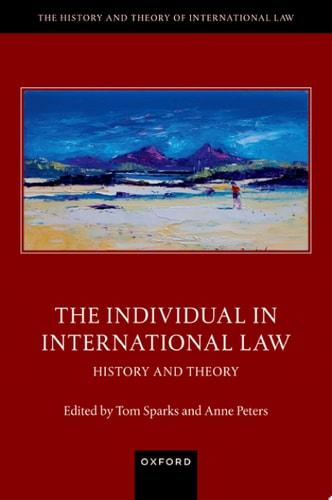
The Individual in International Law
0
0
As an Amazon Associate and affiliate partner, Menrva Books earns from qualifying purchases. Learn more
Author Description
Shifts across the corpus of international law have brought the international legal system into a closer alignment with the interests of the individual. This has led to a great and growing interest in the roles and status of individuals in international law, and provided new impulses for debate. The Individual in International Law is an exploration of what is described as the humanisation of international law. It examines how international law has accommodated individuals, and how individual status, rights, and obligations have become denser and more important in the international legal system. Split into two parts, the book analyses the humanisation of international law in different historical periods and from various theoretical perspectives. The first part focuses on the historical evolution of international law, exploring how the interests of individuals have shaped the development of the legal system from antiquity to 1945, providing a counterpoint to State-centric readings of international law's history. The second part contains theoretical debates, critical approaches, and interdisciplinary investigations, offering perspectives from ius positivism and ius naturalism, Marxism, TWAIL, feminism, global law, global constitutionalism, law and economics, and legal anthropology. The book aims to stimulate further research on the humanisation and dehumanisation of new fields ranging from the ius contra bellum to climate law. The editors' introduction and conclusion frame the contributions, draw together their findings, and address critiques comprehensively. Written by a team of acknowledged experts in their fields, this volume elucidates how the interests, rights, obligations, and responsibilities of individuals have shaped international norms and regimes, and suggests how a reoriented transformative humanism can inform and develop international law in an era of profound ideological, ecological, and technical challenge. This is an open access title.
Menrva's Summary
THE THESIS
This volume investigates the historical evolution and theoretical implications of the 'humanisation' of international law, questioning how the individual has transitioned from a peripheral subject to a central actor within the global legal system.
Edited by Anne Peters and Tom Sparks, the book compiles contributions from a diverse group of legal scholars to examine the shifting status of individuals in international law. By analyzing the field through both historical and theoretical lenses, the authors argue that the interests, rights, and obligations of individuals have fundamentally reoriented international norms. The work provides a comprehensive framework for understanding how human-centric legal developments challenge traditional, state-centric interpretations of global governance.
THE SCOPE MAP
What You Will Find
- Historical analysis of individual status in international law from antiquity through 1945.
- Theoretical frameworks including Marxism, TWAIL, feminism, global constitutionalism, and legal anthropology.
- Investigations into the humanisation of specific legal fields such as ius contra bellum and climate law.
- Critical perspectives on the tension between state sovereignty and individual rights.
THE AUTHORITY PERSPECTIVE
Experts recognize this volume as a significant contribution to the study of international legal theory, particularly for its interdisciplinary approach to the humanisation of law. Readers frequently note the academic density of the prose, which serves as a foundational resource for scholars and advanced students exploring the intersection of human rights and international jurisprudence.
Page Count:
464
Publication Date:
2024-01-01
Publisher:
Oxford University Press
ISBN-10:
0198898916
ISBN-13:
9780198898917
International Law
Legal History
Legal Theory
Law
Human rights
Community Tags
Similar Books