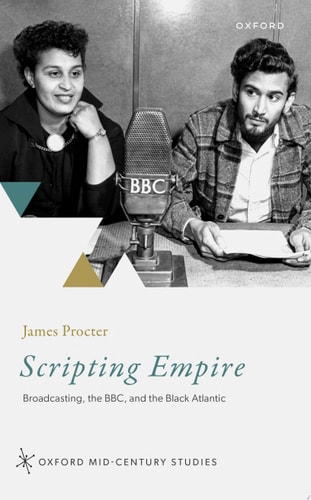
Scripting Empire: Broadcasting, the BBC, and the Black Atlantic
0
0
As an Amazon Associate and affiliate partner, Menrva Books earns from qualifying purchases. Learn more
Author Description
Scripting Empire recovers the literary and cultural history of West Indian and West African writing at the BBC in order to rethink the critical mid-century decades of shrinking British sovereignty, late modernism, and mass migration to the metropole. Between the 1930s and the 1960s, a remarkable group of black Atlantic artists and intellectuals became producers, editors, and freelancers at the corporation, including Una Marson, Langston Hughes, Louise Bennett, Wole Soyinka, Derek Walcott, Amos Tutuola, V.S. Naipaul, Sam Selvon, Cyprian Ekwensi, Stuart Hall, and C.L.R. James. Operating at the interface of a range of literary and broadcast genres, this loose network of African Caribbean writers and thinkers prompt a reassessment of the aesthetic, formal, and political fallout of decolonization between the outbreak of World War II and the first airings of post-colonial independence. Scripting Empire works comparatively across dozens of different programmes spanning the General Overseas Service, Home Service, Light Programme, and Third Programme. Drawing upon a transnational archive of materials including scripts, correspondence, periodicals, visual records, and sound recordings, it seeks to re-position the cultural contribution of West Indians and West Africans within a more pervasive and porous account of radio transmission, the legacy of which extends well beyond broadcasting.
Menrva's Summary
THE THESIS
This book investigates the pivotal role of West Indian and West African intellectuals in shaping the BBC’s cultural output during the mid-twentieth century. James Procter, a scholar of post-colonial literature, examines how these writers and producers navigated the corporation’s infrastructure during a period of declining British sovereignty and mass migration. By analyzing the intersection of broadcasting and literature, the author argues that these figures were central to the aesthetic and political shifts of the era. The work utilizes a transnational archive to demonstrate how these artists influenced the development of late modernism and the discourse of decolonization.
THE SCOPE MAP
What You Will Find
- Analysis of BBC programming across the General Overseas, Home, Light, and Third services between the 1930s and 1960s.
- Examination of the professional contributions of figures such as Una Marson, Wole Soyinka, Derek Walcott, and C.L.R. James.
- Methodology incorporating archival research of scripts, correspondence, periodicals, and sound recordings.
- Exploration of the aesthetic and formal impact of black Atlantic writers on British broadcasting and post-colonial identity.
THE AUTHORITY PERSPECTIVE
Scholars in the field of media history and post-colonial studies recognize this work as a significant contribution to understanding the institutional history of the BBC. Readers frequently note the academic density of the prose and the depth of the archival research presented by the author.
Page Count:
304
Publication Date:
2024-01-01
Publisher:
Oxford University Press
ISBN-10:
0198894171
ISBN-13:
9780198894179
History
Media Studies
British History
Literary Criticism
African history
American History
Community Tags
Similar Books